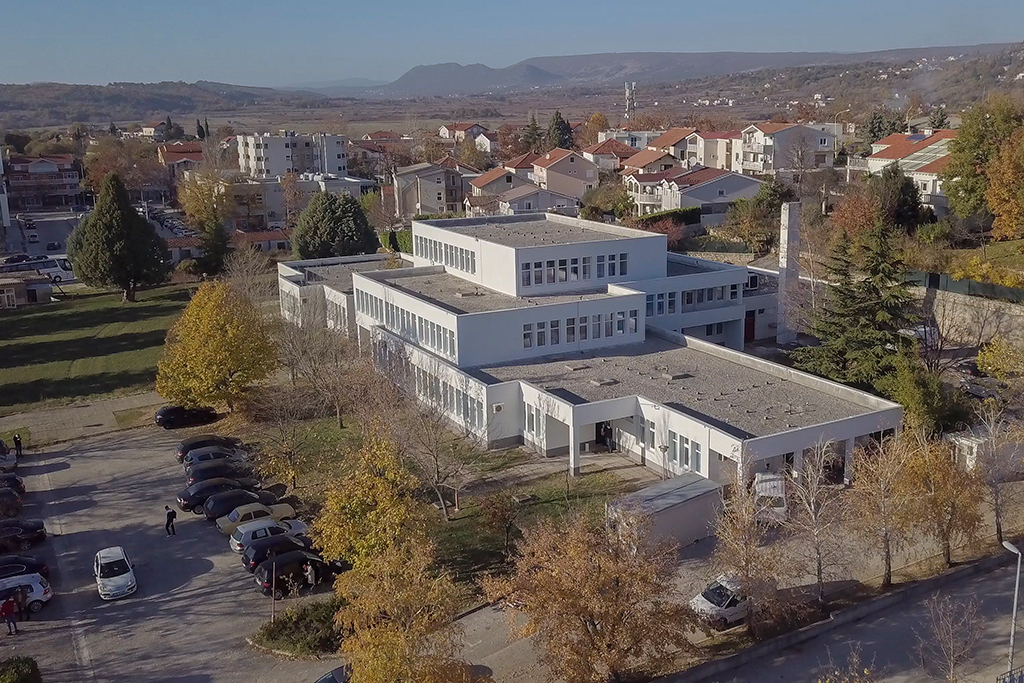
Ambulance Building Čitluk
Address: Varda bb, Konjic
Heated area: 2004,6m2
Energy efficiency measures:
Total investments (BAM with VAT): 82,678.75
Total energy savings (thermal and electrical): 302,007 kWh/year
CO2 emissions: 188 tCO2/year
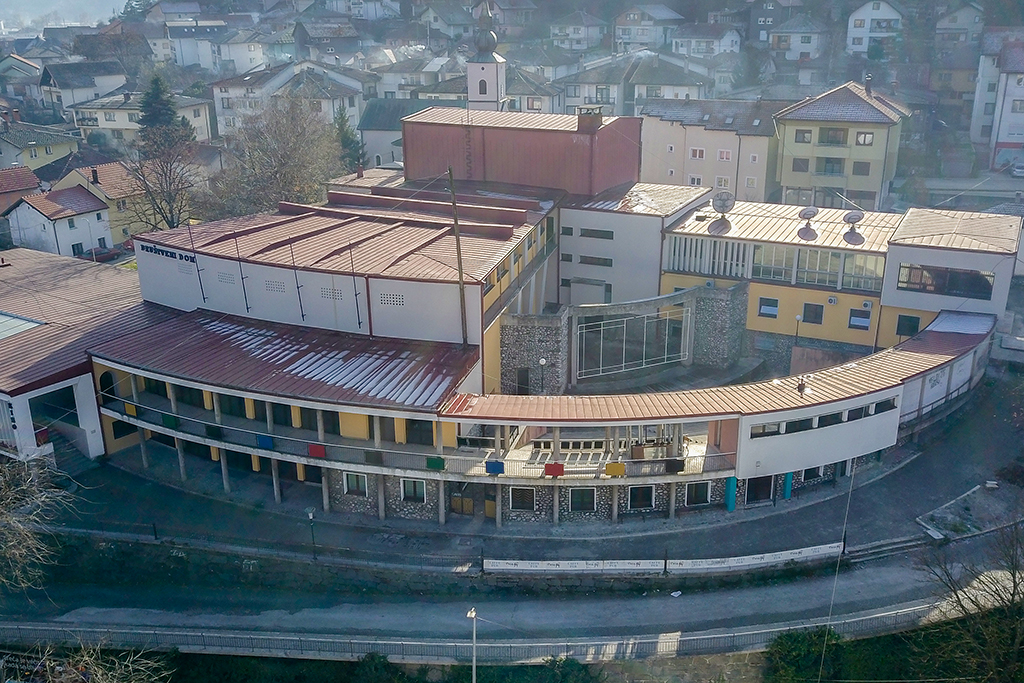
JU Center for Culture “National University Konjic”
Address: Varda bb, Konjic
Heated area: 3,578 m2
Energy efficiency measures:
Total investments (BAM with VAT): 80,007.53
Total energy savings (thermal and electrical): 502.729 kWh/yr
CO2 emissions: 312 tCO2/yr
FEDERAL INSTITUTE FOR AGRICULTURE
Address: Butimirska cesta 40, Sarajevo
Heated area: 2,789 m2
Energy efficiency measures:
Total investments (BAM with VAT): 793,017.27
Total energy savings (thermal and electrical): 191,208 kWh/year
CO2 emissions: 13,5 tCO2/year
The Federal Ministry of Physical Planning of Bosnia and Herzegovina is organizing an
international conference “Improving the environment for energy efficiency in the public building
sector in Bosnia and Herzegovina”.

The Federal Ministry of Physical Planning of Bosnia and Herzegovina is organizing an international conference “Improving the environment for energy efficiency in the public building sector in Bosnia and Herzegovina”, which will be held on September 14, 2022. in the City Hall in Sarajevo. Bosnia and Herzegovina is characterized as a country with a very high degree of energy inefficiency in the building, industry, and services sectors. The average energy consumption in public buildings in Bosnia and Herzegovina is three times higher than the EU average, which categorizes them as completely energy-inefficient buildings. The cause of the slow progress in improving energy efficiency (EE) in Bosnia and Herzegovina is non-harmonized laws and the lack of bylaws in the field of energy efficiency, renewable energy sources, and the lack of funding mechanisms.At the same time, Bosnia and Herzegovina has one of the most significant potentials for energy storage in the region and could base its further medium-term economic development and job creation on measures to improve EE in the public and housing sectors. The Government of the Federation of Bosnia and Herzegovina has recognized the importance of energy efficiency towards sustainable economic development of BiH and our country’s accession to the EU, and through the World Bank project for energy efficiency in Bosnia and
Herzegovina (BEEP), implemented in 2016 in the Federation of BiH, on the benefits of improving EE in the public building sector and support the development of scalable energy efficiency financing models. The International Conference “Improving Energy Efficiency Enabling Environment in Public Buildings Sector in the Bosnia and Herzegovina” will bring together all stakeholders interested in the energy
efficiency local market and the public building sector to discuss on all aspects relevant for the EE in public buildings, particularly the financing models and capacity buildings. With the aim of removing existing barriers to market development and improving energy efficiency in the public
building sector, this event will serve as a platform to present new ideas and solutions that will help Bosnia and Herzegovina in the EU accession process and meet the requirements of the Energy Community Treaty.
The conference will host distinguished domestic and international experts who will present their experiences and discuss the following topics:
Yesterday and today, the World Bank delegation visited the facilities of the Police Academy of the Federal Ministry of Interior in Sarajevo and the Faculty of Metallurgy and Technology of the University of Zenica, where energy efficiency measures were implemented.
Yesterday and today, the World Bank delegation visited the facilities of the Police Academy of the Federal Ministry of Interior in Sarajevo and the Faculty of Metallurgy and Technology of the University of Zenica, where energy efficiency measures were implemented. These activities are part of the project “Energy Efficiency of BiH” (BEEP), implemented by the Federal Ministry of Physical Planning and funded by a loan from the World Bank.
“This visit is part of our regular activities, intending to continuously monitor the implementation of energy efficiency measures in public facilities that are part of the BEEP project. We can say that the works have been successfully realized, and we believe this project will be able to be further improved in the future. We are pleased that students will have adequate space that we think will encourage them to work, learn and achieve better results”, said Christopher Sheldon, World Bank Country Manager for Bosnia and Herzegovina and Montenegro.
The implementation of energy efficiency measures in public buildings began in 2016. By the end of 2020, 25,088,140.12 KM (including VAT) was invested in the renovation of 55 buildings of health, educational and other institutions. Estimated annual savings amount to 3,039,828 KM (including VAT) and CO2 emissions have been reduced by 4,564 tons per year.
“BiH has recognized the importance of energy efficiency, and to achieve economic sustainability, it has approached additional funding for the project” Energy Efficiency for BiH (AF BEEP) from World Bank loans. AF BEEP is a project of great importance in the entire process of BiH’s accession to the European Union. In the second phase of AF BEEP, it is planned to implement energy efficiency measures at 40 facilities, of which 25 have been renovated so far “, said Josip Martic, Minister of Physical Planning of FBiH.
The total value of performed works at the Faculty of Metallurgy and Technology of the University of Zenica amounted to 1,228,476.43 KM. Measures for thermal insulation of external walls and roof, replacement of external carpentry/locksmithing, partial change of lighting and installation of thermostatic valves, and replacement of thermal substation were carried out at this facility. These works saved a total of 613,473 kWh / year of thermal energy.
“These are the largest investments set aside so far for the works on building the Faculty of Metallurgy and Technology.” In addition to achieving significant savings and reducing CO2 emissions, we have created excellent conditions for students and their professors, which will undoubtedly contribute to the quality of the teaching process“, said Minister of Education, Science, Culture and Sports of Zenica-Doboj Canton Spahija Kozlic.
The FMUP Police Academy is also satisfied with the investments and works within the project “Energy Efficiency in BiH” (BEEP). According to experts, this building will also reduce energy consumption and CO2 emissions, which will amount to 425.3 t / CO2 annually. 944,207.97 KM was invested in this facility, and the estimated energy savings after the realization, on an annual level, amounts to 2,214,841 kWh / year.
“We at the FMUP Police Academy are satisfied with what has been done. Thermal insulation of façade walls was done, existing carpentry and locksmithing was replaced, roof and ceiling thermal insulation was done, dynamic thermostatic valves were installed, lighting fixtures were partially replaced, and by installing calorimeters, temperature and humidity sensors, we had the opportunity to monitor savings are more than obvious”, believes Damir Vejo, director of the Academy.
The visit ended with a discussion on ways to improve the implementation of the project itself, which in the future would facilitate the entire process of implementing energy efficiency measures, both for users of facilities and contractors.
Investments in energy efficiency will reduce energy consumption in selected public sector facilities and demonstrate the economic viability of improving energy efficiency, including reducing current energy costs and related public expenditures.


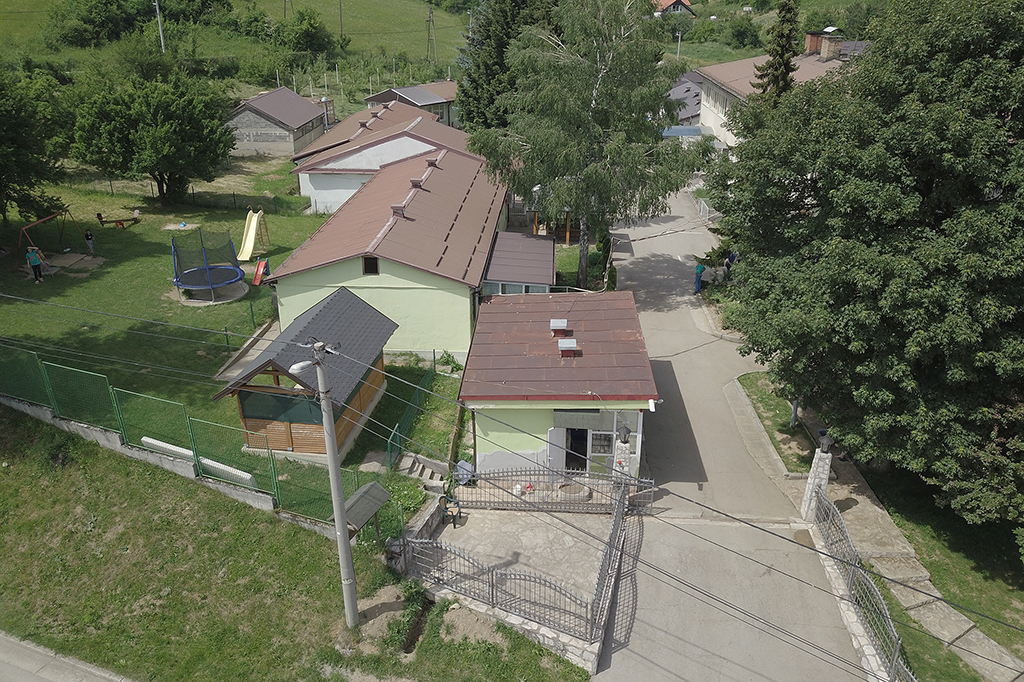
PUBLIC INSTITUTION FOR THE CARE OF MENTALLY DISABLED CHILDREN AND YOUTH, PAZARIĆ
Address: Resnik b.b. Pazarić
Heated area: 358 m2
Energy efficiency measures:
Total investments (BAM with VAT): 210,013.30
Total energy savings (thermal and electrical): 345.637 kWh/year
CO2 emissions: 320 tCO2/year
Start of works: 27/10/2022
Works completed/Date of technical acceptance: 18/01/2023
FEDERATION GOVERNMENT BUILDING, MOSTAR
Address: Ante Starčevića bb, Mostar
Heated area: 4,351 m2
Energy efficiency measures:
Total investments (BAM with VAT): 1,075,698.00
Total energy savings (thermal and electrical): 142,275 kWh/year
CO2 emissions: 34 tCO2/year
Let spring bring higher air temperatures and lower bills to your home

This article will look at how it is possible to do many little things in the spring, which will ultimately bring significant benefits to your homes’ energy efficiency and the number of bills.
During the winter days, we all want to heat our homes as well as possible while saving as much money as possible. However, we also want to save some money in our wallets in the spring, and here are some valuable tips on achieving this. In winter, to save money, it is enough to reduce the thermostat by one degree to save five percent of energy, but you can do it also in spring and summer because during the day you can completely turn off the heating or put it in weaker mode. In the spring, ventilate your home often for natural cooling. Open the windows in the evening to fill the space with cooler air, which will make your sleep more comfortable and your wallet fuller at the end of the month. There are a few more useful tricks. Stop washing dishes by hand. Did you know that your dishwasher consumes less water than a manual dishwasher? Use the dishwasher only when it is full of dishes. Please avoid the dishwasher drying program as it consumes extra energy. You will also save money by connecting the dishwasher to a hot water connection instead of cold water, as most of the energy is spent on heating the water. This is especially recommended if you heat water with solar collectors or a gas boiler.
In the spring, use as much natural light as possible. Always make sure you turn off lights you don’t need regularly. It is nice to have fleshy green plants like cactus in the living space because they are excellent air purifiers. This was confirmed by NASA, which found in its research that these plants can eliminate up to 87 percent of harmful substances found in paints and varnishes. In addition, houseplants improve concentration and memory and reduce stress. These plants also eliminate toxins such as formaldehyde and benzene, primarily found in carpets, cigarette smoke, plastic bags, books, etc. Always buy energy class A household appliances because energy class A appliances and lighting fixtures consume up to 40% less energy than the same energy class D appliances.
Today you can get washing machines that wash from 3 to 7 kg of laundry. So please choose the one that suits your washing needs and use it according to the manufacturer’s instructions. Washing a full laundry drum is much more energy-efficient than two washes of a half-filled drum. In the case of an overloaded drum, the laundry will not be washed properly. Always choose a laundry program with the lowest water temperature enough for your laundry to be cleaned properly. Remember that today’s laundry detergents successfully remove impurities even at lower washing temperatures. If possible, always use the washing machine at lower rates. Also, the spring period is ideal for resting your dryer. Whenever you have the opportunity, dry your laundry on the balcony. Warm spring days will help you with that, and in addition to saving, you will also get a wonderful scent of freshness.
It seems sometimes to you that as individuals you cannot change anything, but you have to know that this is not true.

It seems sometimes to you that as individuals you cannot change anything, but you have to know that this is not true. Today we are witnessing great floods in the world, high temperatures causing forest fires, air pollution that takes many human lives, and all this was contributed by a man who was irresponsible towards nature and lifestyle. Air pollution is one of the world’s greatest environmental risks to human health. The World Health Organization (WHO) estimates that 91-99% of the world’s population lives in places where air quality exceeds WHO recommended guidelines. According to recent WHO statistics, BiH has the highest mortality rate due to indoor and outdoor air pollution in Europe and the second highest in the world. Outdoor air pollution is usually most pronounced in urban centers. For example, in Sarajevo, permitted particle limits are often exceeded 60 to 90 days a year, sometimes up to 200 days, causing significant health problems.
It is time to take small steps now that can bring significant climate and health benefits to you and your environment in the future. Wondering how? For example, if you improve energy efficiency in the house, you can significantly reduce emissions from energy use, improve the quality of outdoor and indoor air and positively affect your own and the health of people around you. Scientific studies have shown that air quality is twice as good in energy-efficient houses than in houses that are not. People who work in energy efficient buildings are less likely to suffer from fatigue, headaches or skin irritations, and are much more productive at work.