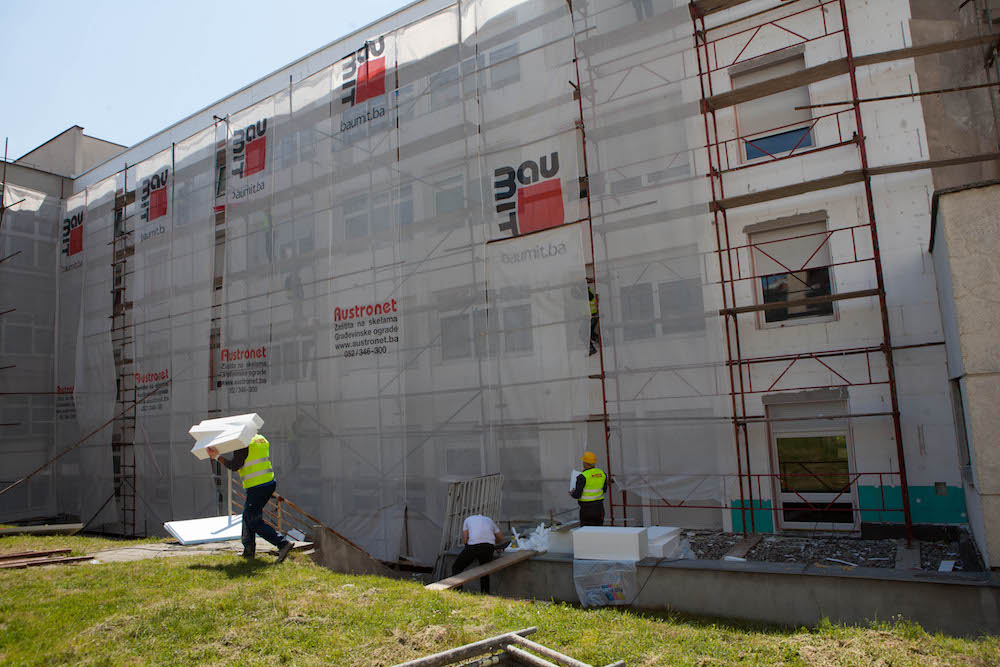


In FBiH in 2016 it is planned to implement EE measures in 23 public buildings.
Part of this means the biggest project of energy efficiency in Bosnia and Herzegovina in the framework of which will be in the next three years invested 32 million US dollars, of which the Federation of Bosnia and Herzegovina allocated 19.23 million US dollars.
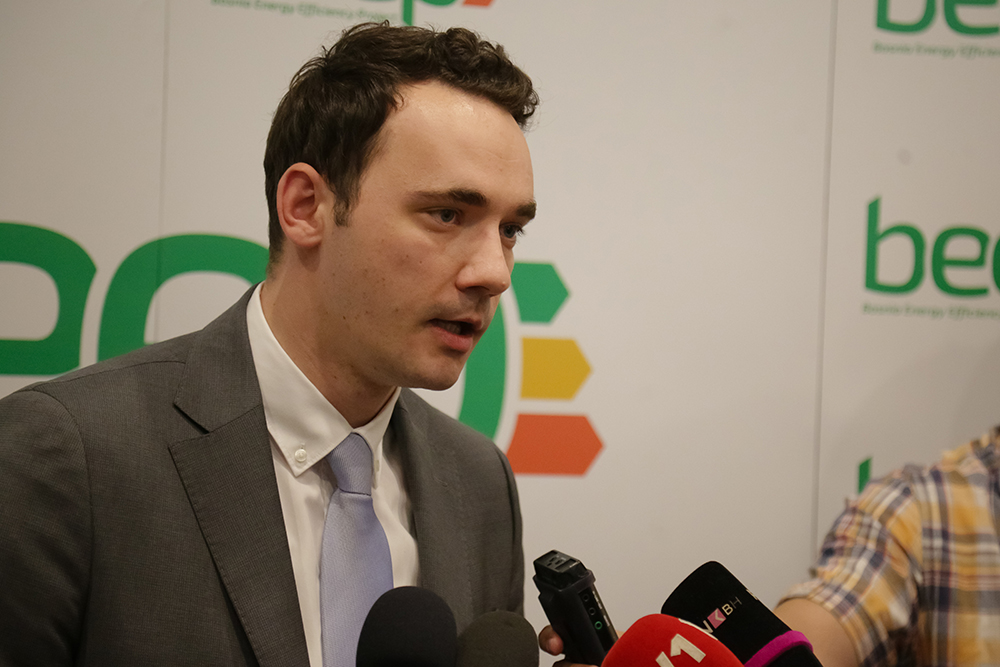
“Bosnia and Herzegovina recognized the importance of energy efficiency, and in order to achieve economic viability of energy efficiency and the process of joining the European Union, joined the financing of the project “Energy efficiency in Bosnia and Herzegovina” (BEEP) of loans from the World Bank or the International Association for development Association (IDA)”, said the press in Sarajevo Head of the World Bank project for the Federation of Bosnia and Herzegovina Mustafa Čopelj.
With that, he added, taking place in parallel and social activity monitoring, promotion, communication, etc. It is also working on the selection of objects for 2017 which is planned in the Federation to renew for another 20 public buildings in the area of health and education (schools, hospitals, clinical centers, kindergartens, nursing homes and the like.)
“One of the conditions of the World Bank to obtain such a favorable means is that the return on investment of up to eight years, but generally it is between five and eight years. It shows all the energy audits that were done for all these objects, so that we, through the preparation of technical monitoring before and after, to have the exact figures after the following winter season for objects that will renew this year,” he added Čopelj.
He noted that the implanted quality materials that have a life of at least 20 years.
Speaking about the continuation of the project, Čopelj said that there is great interest cantonal government, and that is likely to expect that after 2018 probably have the second phase of the project, especially if they try to implement pilots sustainable financing mechanisms which are currently working on.
We expect significant investments for educational and health facilities
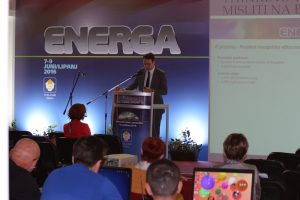
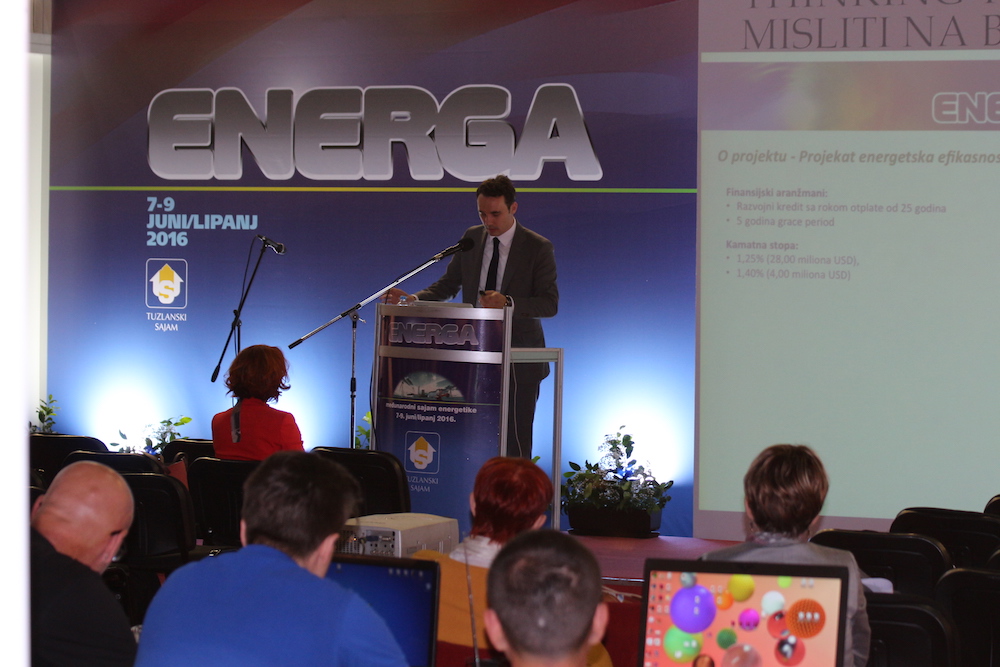
ENERGA Fair is a meeting of prominent domestic and foreign companies and institutions that it’s various research and production achievements, trends and achievements of modern energy, and various forms of business cooperation, presenting to the professional-relevant public.
The exception was neither BEEP project (Bosnia Energy Efficiency Project), where on the second day of the fairs presented their plans for 2016 and 2017. As one of the largest projects in Bosnia and Herzegovina, where only in the FBiH plans to invest 19.20 million in the period of 3 years, it was very interesting to hear the presentation Mustafa Čopelj, Head of the World Bank project for the Federation of Bosnia and Herzegovina.
“Together with our partners we plan to implement energy efficiency measures at 50 facilities in the next two years. We are taliking about public institution, the focus is on learning and health care facilities. Implementation of energy efficiency measures has clear calculations of savings and return on investment through the next period. I sincerely hope that we will be a driver or perhaps the implementer of such projects and for residential buildings, and through a parallel education of citizens to raise awareness about this very important topic”, concluded Čopelj.
BEEP project representatives in a visit to the Energy Community

On 31.05. and 01.06. Representatives of the project BEEP (Bosnia Energy Efficiency Project) for the Federation BiH took part in the activities of coordination group of the Energy Community Secretariat for energy efficiency in Vienna.
During the meeting, the Energy Community Secretariat published a special edition of the legal framework of the Energy Community that focuses solely on energy efficiency. The publication brings together the legal acts in force, the relevant decisions of the Ministerial Council and procedural acts amending the original EU acquis, as well as all implementing directives and delegated regulations on the labeling of energy efficiency which is currently implemented by the Energy Community.
The meeting gathered more than 60 experts together with the Energy Community Secretariat, the European Commission and the donor community. Representatives of the project BEEP were Mr. Mustafa Čopelj, Head of the World Bank project for the Federation of BiH and Adnan Efendić, President of the Project Steering Committee.
Experts also discussed the progress of the development of national action plans for energy efficiency (NEEAPs), and reported about the energy efficiency projects that implement good practices of Energy Community. In particular, they shared their experience in regard to energy services (ESCO) model. In addition, the performance, of the Regional Energy Efficiency Program (REEP) for the Western Balkans in the first two years of implementation, was assessed.
The series of energy efficiency events continued with workshops on the implementation of energy efficiency, directives and funding opportunities and the workshop itself was organized in cooperation with the World Bank.
The final conclusion for Bosnia and Herzegovina is that there are certain delays due to, among other things, failure to pass the law on energy efficiency in BiH.
ENERGY COMMUNITY LEGAL FRAMEWORK – click to download document
After the implementation of energy efficiency measures, monitoring and measurement of the mentioned items shall be continued for at least two more years.

One of the objectives of the World Bank’s Project “Energy Efficiency in BiH” (BEEP) for the Federation of Bosnia and Herzegovina is the confirmation or verification of the expected effects of energy efficiency measures which have been selected through the project implementation. This activity will be realized through Technical Monitoring and Evaluation (TME).
As a prerequisite for achieving this objective, each facility on which the energy efficiency measures are being implemented, got built-in measuring equipment for measurement of the value of important parameters for heating, cooling and ventilation of facilities.
There are currently 28 facilities with built-in equipment, which already have provided us information on the state in these facilities before the implementation of the energy efficiency measures. That information is related to:
Delivered amount of thermal energy for heating of facilities, whereby measurements may be at the minute, hourly, daily, monthly or seasonal record level of measurement results.
Measurement of internal and external temperature and humidity in the three characteristic rooms (according to the purpose), by use of equipment that allows minute, hour, daily, monthly or seasonal (annual) reading of measured values.
By such approach the BEEP offered for the first time a complete and comprehensive model for resolving the issue of energy efficiency. Also, by measuring reports (technical monitoring “before” and “after”) will make quality assumptions to confirm, in other words to verify the expected results after the implementation of energy efficiency measures.
Beside verification and validation of the results of the BEEP Project, data measured and processed through TME will support the goals of the Federation of Bosnia and Herzegovina in terms of savings in energy consumption which are provided by the Action Plan for Energy Efficiency of FBiH (EEAPF), and based on the obligations established by the National Energy Efficiency Action Plan of Bosnia and Herzegovina ( NEEAPs).
“There is no other way to accurately confirm estimates, budgets, analyses and achieved effects of implemented energy efficiency measures of selected scenarios than results obtained by the measurement. For this reason the installation of permanent equipment for monitoring of obtained results is a crucial project to demonstrate the feasibility and viability of the projects of energy efficiency”, Said Mesud Mustedanagić, Technical Expert of the Implementation Unit of the World Bank Project ” Energy Efficiency in BiH ” for the Federation of Bosnia and Herzegovina.
After the implementation of energy efficiency measures, monitoring and measurement of the mentioned items shall be continued for at least two more years in order to get a more objective picture of actual consumption, savings and comfort in facilities.
For the provision of the above-mentioned data, the following equipment has been installed:
Ultrasonic measurer of delivered thermal energy (based on the measurement of the flow of hot water pipelines), battery power for autonomy in the work and independence of supply from the city network, M-Bus modules, integrated in measurers, for storing of measured data as well as sensors for measuring of temperature in starting and return heating system. For the installation it is necessary to predict calorimeter of required diameter of the heating system for each facility.
Data Logger OPUS for “storage” of obtained data, sensors for indoor and outdoor temperature and humidity as well as Y connectors and BUS cables for functional connection of the above mentioned components of the measuring system.
The application program that processes the peripheral data and provides numerical and graphical display of measured values. The results can be read and downloaded on the spot and also it is possible to upgrade the system for remote reading.
World Bank satisfied with the implementation of project BEEP

During the regular activities of the World Bank’s mission in Bosnia and Herzegovina, a visit to Federal Ministry of Physical Planning was organized. Reason for the visit was recently launched project „Energy efficiency in BiH“ for the Federation of BiH (BEEP – Bosnia Energy Efficiency Project), the greatest energy efficiency project in Bosnia and Herzegovina.
The meeting was attended by Josip Martić, Federal Minister of Physical Planning, Jari Vayrynen, Task Team Leader of the project for the World Bank, Mustafa Čopelj, Head of the World Bank project for the Federation of BiH, and Adnan Efendić, President of Management Committee for the project.
On behalf of the World Bank, Mr. Jary Vayrynen, expressed satisfaction with the so far performances, commended the work of the implementation unit of the project, and announced that the World Bank is ready to support this project in the future period via both, investments and consultancies.
“We are more than satisfied with the dynamics and the implementation of the project, especially given the delays due to procedural grounds. Along with the activities related to reconstruction of public facilities, through this project it is also important to implement the mechanism of sustainable funding system out of savings realized exactly from energy efficiency. In the future, it would be good to create similar projects for citizens, and residential buildings as well, where there is a great potential for making savings” concluded Mr. Josip Martić, Federal Minister of Physical Planning.
In the framework of the World Bank’s mission, a visit to Clinical Center University in Sarajevo was organized as well as a tour of Clinic of Orthopedics and Traumatology, facility that is already under reconstruction. During the visit, representatives of the World Bank had the opportunity to meet with the representatives of the Clinical Center University of Sarajevo who did not hide their satisfaction with the current cooperation. Representatives of CCU Sarajevo introduced representatives of the World Bank with the plans of CCU Sarajevo in terms of infrastructure projects.
“Measures of energy efficiency at three clinical centers (Mostar, Tuzla and Sarajevo) are currently in the process of implementation. Specifically, at the Clinic for Orthopedics and Traumatology of CCU Sarajevo, construction works take place as planned, with the full support of users. So far, 95% of hatches have been replaced, 50% of facade works are completed, and in the following days, installation of thermostatic valves is planned. We note that the works are carried out professionally, in accordance with professional standards, and that high-quality material, windows and doors are in the process of mounting, in which representatives of the World Bank for the Federation of BiH who did not hide their satisfaction, could convince themselves”, said Mustafa Čopelj, Head of the World Bank project for the Federation of BiH.
Significant investments in energy efficiency in Bosnia and Herzegovina

Significant investments in energy efficiency in Bosnia and Herzegovina
Bosnia and Herzegovina began implementing the largest project of energy efficiency
Bosnia and Herzegovina recognized the importance of energy efficiency, and in order to achieve economic viability of energy efficiency and the EU accession process, joined the financing of the project “Energy efficiency in Bosnia and Herzegovina” (BEEP) of loans from the World Bank or the International Association for development Association (IDA). This is the largest project of energy efficiency in Bosnia and Herzegovina in the framework of which will be in the next three years to invest a total of 32 million US dollars, of which the Federation of Bosnia and Herzegovina allocated 19.23 million US dollars. Federal Ministry of Physical Planning, through the implementation unit of BEEP is responsible for the preparation, coordination, management and implementation of the Project in the Federation of Bosnia and Herzegovina.
The development objective of BEEP is to demonstrate the benefits of improving energy efficiency in public sector facilities and support the development of flexible financing model of energy efficiency.
In the first phase of the project in 2016 in the Federation of BiH it is planned to implement energy efficiency measures (replacement of windows, installation of thermal facade, improving heating systems …) in 23 public buildings in the area of education and health in the Sarajevo Canton, Zenica Doboj Canton, Una-Sana Canton and Herzegovina-Neretva and Tuzla Canton. In addition to improving comfort and conditions in selected public buildings, are expected and significant savings in energy costs.
“This year we plan to implement energy efficiency measures in 17 educational and 6 health institutions of which 3 clinical centers in Sarajevo, Tuzla and Mostar. In parallel with these activities during the selection process of public facilities for 2017 and mobilize the development of flexible funding mechanisms of energy efficiency in the public sector, “said Mustafa Čopelj, Head of the World Bank project for the Federation.
The activities to be implemented under the project will yield results such as reduced CO2 emissions which means the transition to cleaner energy, reduce air pollution in winter caused by improper and inefficient combustion of fuels that are now in use, to increase the level of comfort in buildings, positive impact on employment in the construction sector, an increase in awareness of energy efficiency in the participating communities, reducing local pollution.