Myths on Energy Efficiency

Energy efficiency is one of the topics that is often talked about but isn’t really known. For this reason, we often encounter habits based on partially or entirely false information.


Energy efficiency is one of the topics that is often talked about but isn’t really known. For this reason, we often encounter habits based on partially or entirely false information. Not only can these misconceptions increase your energy consumption, but they can also be the reason for an additional expense for your household. Therefore, we present to you some of the most common myths about energy efficiency.


Myth 1: New = Energy efficient


Building a new living space or installing new windows does not necessarily save energy. In the case of energy efficiency, age is just a number. Design and construction play a much more critical role in determining whether your home is built in a way that provides more productive energy use. At the same time, when buying electronic devices, it is essential to check its energy rating, which is an easy way to measure and show the efficiency of a device, according to how much energy it consumes.


Myth 2: Setting the thermostat temperature to a higher degree warms the room faster


Regardless of the temperature set on the thermostat, your boiler will operate at the same volume to reach the set goal. The reason for this is the fact that their systems are built with a predetermined maximum power level. This means that the only difference made by setting the temperature to a higher degree is the fact that the system will run for a longer period of time, which automatically means that it will consume more energy. The same applies to air conditioners that are set at a lower temperature than you want to reach to cool the room faster.


Myth 3: Leaving the light on will consume less energy than switching it off and on several times


Although a higher power level is required to turn on the light, this level is only used for a split second. On the other hand, when the light is kept on, it uses a lower energy level but for a longer period. Ultimately, if the light is on for more than a few seconds, then it consumes more energy than necessary to switch it off and on again. Therefore, turn off the switch next time you leave the room, even if you will be returning in a few minutes.


Myth 4: Household appliances do not consume energy when not in use


When not in direct use, many home appliances switch to standby mode. Standby allows them to restart quickly, but on the other hand, this is the reason why the devices continue to consume power. For this reason, these devices are also called energy vampires. So don’t forget to turn off all the appliances you don’t use to save energy, but also reduce your energy bills.

Monthly Challenge: Reduce Paper Use!


Can you imagine a day in the office go by without using any paper, at all? It sounds complicated, right? We often justify our dependence on paper by the fact that it is cheap but also renewable, so it is not surprising that most people do not bother to reduce its daily consumption. However, a considerable amount of natural resources and energy are used to produce paper. First, the trees are cut into small pieces, then water and heat are added, and sometimes chemicals are used to separate the fibers. The fibers are then spread over a large surface to join in a specific shape, then squeezed and ultimately woven into the desired shape.

Considering the complexity of this process, it is not surprising that its production is the fourth-largest greenhouse gas emitter in the manufacturing sector. Therefore, this month’s challenge is to reduce the use of paper in your daily life, and below, we bring you five tips to help you take this challenge into reality.


Use electronic documents

Instead of writing down on paper, use your smart devices: a cell phone, a laptop, or a tablet. Each has a variety of applications that will allow you to write notes and optimize your organization. Instead of sending the documents by mail, e-mail them; and replace books, newspapers, and magazines with their electronic versions.


Use a writing board in your office

Writing notes and tasks that are to be done are some of the most common reasons for reaching out to paper and pen everyday. The ideal substitute for paper is a writing board, which allows recording all essential things. At the same time, it can be beneficial for every brainstorming session.


Replace paper napkins with linen ones

If you pay attention, you will surely notice how many paper napkins or wipes are used daily — replacing them with linen to reduce the amount of paper consumed. At the same time, colorful linen napkins will brighten your daily meal, making every meal more exciting and attractive.


Use the other side of the paper

Using only one side of the paper is a habit that most people unknowingly adhere to. You can use the other side for notes or drafts, as well as to-do lists. When printing documents, use print on both sides as possible, as this will significantly reduce the amount of paper consumed.


Online bill payment

Paying online, in addition to reducing paper consumption, will be an additional relief as you will no longer have to waste time waiting in line. Most banks offer the option of sending online statements of account, so using online reports can further reduce paper consumption.

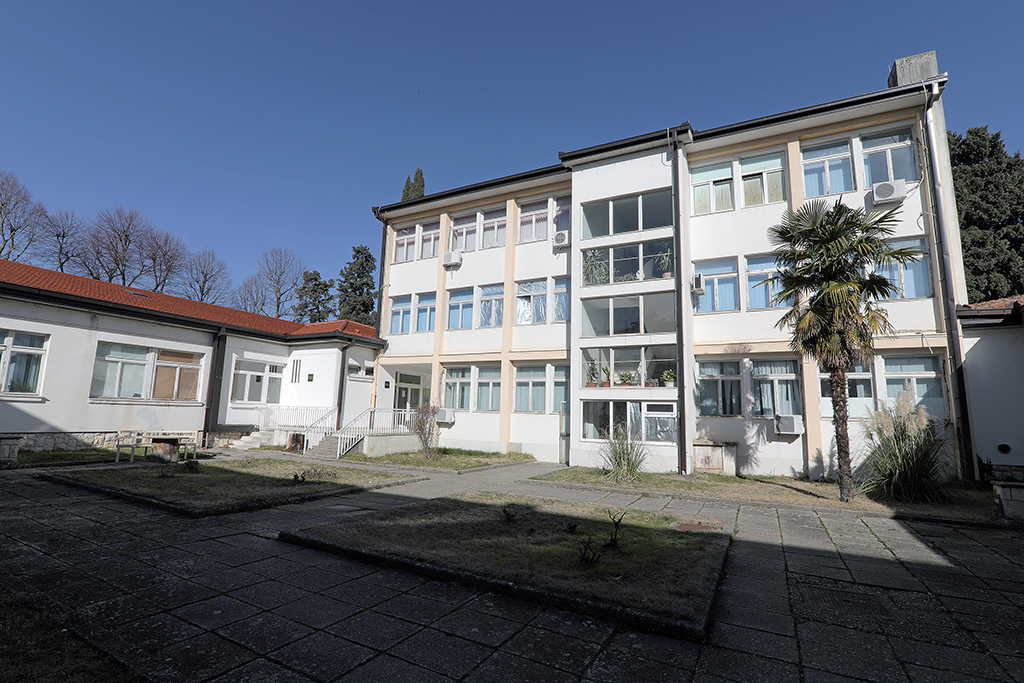
Health Centre Čitluk

HEALTH CENTRE ČITLUK

Stjepana Radića 3, Čitluk

Heated area: 2,004.6 m2


Energy efficiency measures:


  • Replacement of facade openings
  • Thermal insulation of walls

Total investments (BAM with VAT): 252,696.58 
Estimated savings on energy costs after the realization of the sub-project, on an annual basis – calculated (BAM): 41,648.00
Total energy savings (thermal and electrical):  302.007 kWh/year
CO2 emissions: 33 tCO2 /year
Works completed: 10/2020

Public Institution Cultural Centre for culture “People’s Univerzity of Konjic”

PUBLIC INSTITUTION CULTURAL CENTRE PEOPLE’S UNIVERSITY OF KONJIC

Varda bb, Konjic

Heated area: 3,578 m2


Energy efficiency measures:

 
  • Thermal insulation of external walls;
  • Thermal insulation of the ceiling;
  • Replacement of facade openings;
  • Replacement of lighting fixtures with more energy efficient ones;

Total investments (BAM with VAT): 669,088.01 
Estimated savings on energy costs after the realization of the sub-project, on an annual basis – calculated (BAM): 92,985.00
Total energy savings (thermal and electrical): 502,729 kWh/year
CO2 emissions: 312 tCO2 /year
Works completed: 10/2020

Public Institution Secondary School Prozor-Rama

PUBLIC INSTITUTION SECONDARY SCHOOL PROZOR-RAMA

Kralja Tomislava bb, Prozor-Rama

Heated area: 1,905 m2

Energy efficiency measures:

  • Thermal insulation of external walls;
  • Renovation of the roof structure, replacement of the roof covering and thermal insulation of the ceiling above the heated space;
  • Improvement of the heating system;
  • Partial replacement of facade openings;

Total investments (BAM with VAT): 200.739.28
Estimated savings on energy costs after the realization of the sub-project, on an annual basis – calculated (BAM): 38,038.00
Total energy savings (thermal and electrical): 101,855.00 kWh/year
CO2 emissions: 57 tCO2 /year
Works completed: 10/2020

Ambulance Building Čapljina

Ambulance Building Čapljina

Fra Didaka Buntića bb, Čapljina

Area: 2.471,5 m2

Energy efficiency measures:

  • Thermal insulation of external walls
  • Replacement of the external openings
  • Improvement of ceilings above heated area

Estimated investment for energy efficiency measures: 239.836,17 BAM

Estimated savings in energy costs after the implementation of schemes (BAM with VAT): 69.510,00

Expected annual CO2 emission reduction of 188 tCO2/yr
Expected annual energy savings: 302.077 kWh/yr

Public Institution Secondary School for Environment and wood design

PUBLIC INSTITUTION SECONDARY SCHOOL FOR ENVIRONMENT AND WOOD DESIGN

Address: Vilsonovo šetalište 11, Sarajevo

Heated area: 2,639.39 m2


Energy efficiency measures:

 
  • Thermal insulation of external walls;
  • Rehabilitation of the existing roof of the school building and sports hall, with the installation of thermal insulation;
  • Opening replacement;
  • Replacement of equipment and improvement of the space heating system;
  • Replacement of lighting fixtures with more energy efficient ones

Total investments (BAM with VAT): 626,860.93
Estimated savings on energy costs after the realization of the sub-project, on an annual basis – calculated (BAM): 56,302.74
Total energy savings (thermal and electrical): 510.597,00 kWh/year
CO2 emissions: 136 tCO2 /year
Works completed: 09/2020

Public Institution Elementary school Drvar

PUBLIC INSTITUTION ELEMENTARY SCHOOL DRVAR

Pionirska bb, Drvar

Heated area: 5,893 m2


Energy efficiency measures:


  • Renovation of the roof structure of the gymnasium and locker room area, and installation of a roof covering made of thermal panels;
  • Thermal insulation of the ceiling above the heated area of the old and new school;
  • Replacement of the facade openings of the gymnasium, locker room area and boiler room;
  • Installation of dynamic thermostatic valves;
  • Improvement of the heating system;

Total investments (BAM with VAT): 180,067.96 
Estimated savings on energy costs after the realization of the sub-project, on an annual basis – calculated (BAM): 7,640.00
Total energy savings (thermal and electrical): 127,215 kWh/year
CO2 emissions: 3 tCO2 /year
Works completed: 09/2020

Secondary Transportation School/ Secondary School of Mechanical Engineering and Transportation

SECONDARY TRANSPORTATION SCHOOL/SECONDARY SCHOOL OF MECHANICAL ENGINEERING AND TRANSPORTATION

Address: Dr. Mile Budaka br.26, Mostar

Heated area: 2,900 m2


Energy efficiency measures:


  • Replacement of facade openings;
  • Thermal insulation of external walls;
  • Thermal insulation of the ceiling above the heated space;
  • Installation of the new pellet boiler;
  • Replacement of energy source;
  • Partial replacement of lighting fixtures with more energy efficient ones;

Total investments (BAM with VAT): 403,202.32 
Estimated savings on energy costs after the realization of the sub-project, on an annual basis – calculated (BAM): 60,386
Total energy savings (thermal and electrical): 284,898 kWh/year
CO2 emissions: 121 tCO2 /year
Works completed: 10/2020

Primary school “Drvar”

PRIMARY SCHOOL “DRVAR” 


Drvar


Area: 5.893 m2


Energy Efficiency measures:

  • Thermal insulation of the ceiling
  • Thermostatic valves
  • Energy management team


Estimated investment for energy efficiency measures: 122.999 BAM


Estimated savings in energy costs after the implementation of schemes (BAM with VAT):