How to Save on your Electricity Bills this Summer

With summer comes high energy bills, therefore we bring to you simple yet effective tips that will help you save money


Longer days, sunny weather, hangouts, holidays, beach, sun, sea… All of the aforementioned reasons are why we love summer and why we look forward to it year-round. Now that it has finally arrived, it brought with it the inevitable need for cooling down, which we mainly notice through increased costs. This is why we bring you 5 simple yet effective tips that will help you fight off high energy bills this summer.


  1. Get Grilling!

Cooking during hot summer days can be unbearable. Household appliances, such as fridges or stoves, generate additional heat and can increase room temperatures by as much as 10 degrees celsius. However, you can easily reduce the temperature of your kitchen, but also electricity costs by using a microwave oven or by grilling. Using a microwave will significantly reduce energy consumption while producing less heat and grilling will also allow you to enjoy the summer days with pleasant company.


  1. Use Cold or Lukewarm Water for Washing

Avoid using hot water whenever possible. 90% of energy used by washing machines is needed to heat water, therefore washing with cold water will result in significant savings. At the same time, since water consumption in the summer usually increases due to the care of garden plants, one way of retaining the same level of consumption is through watering flowers or grass early in the morning or evening, which reduces the evaporation of water in the summer heat.


  1. Take Advantage of the Warm Weather

With summer weather comes numerous benefits and it’s up to us to use them to reduce energy consumption and electricity bills. Therefore, air-dry clothes instead of using the dryer. The same principle applies to dishes; use cold water and wait for them to air dry, instead of using your dishwasher’s drying cycle. By using sunlight you can also reduce the amount of electricity you consume and by ventilating rooms in the evening you can cool your living space without using air conditioners.


  1. Pay Attention to Electronic Devices

Do not place devices that generate heat, such as lamps or televisions, near thermostats. By creating additional heat, these devices can “deceive” the thermostat and show higher room temperatures and thus become the reason for increased air conditioning use which will result in higher energy consumption. At the same time, these devices need to be switched off if they are not being used to avoid generating unnecessary additional heat. Also, it is important to note that all devices in standby still consume electricity, which can amount to up to 10% of average annual consumption, therefore their exclusion is of utmost importance.


  1. Use LED Lighting

Curtains or shutters will block out the sun and thus reduce room temperatures. At the same time, it will result in the need for more artificial light so be wary of which light bulbs you’re using. For example, 90% of the energy created by incandescent lightbulbs are converted into heat. On the other hand, LED bulbs use 75% less energy and last up to 50 times longer than traditional ones, thus resulting in savings on your electricity bills.

5 Tips to Keep Rooms Cool Without Additional Costs

How to keep cool without increasing electricity consumption?


With the arrival of summer and high temperatures, keeping rooms cool can become quite challenging. Synonymous for cool rooms is usually air conditioning, but with that comes huge indents in our electricity bills. Taking into consideration that summer is the season that brings additional vacation costs, every saving is worthwhile. Therefore, we spoke to Jasmin Mangafić, head of the Energy Efficiency Project for BiH (BEEP), which is implemented by the Federal Ministry of Physical Planning to bring you some useful tips to keep you energy-efficiently cool this summer.


  1. Close your Blinds

Blinds and curtains will block out solar heat, keeping your room several degrees cooler. Close your blinds in the morning before leaving for work and leave them closed until the evening when temperatures fall. Then, make sure to properly ventilate your home, because for complete comfort, in addition to temperature, air quality is important.


  1. Instead of Air Conditioning, why not try a Ceiling Fan?

Experts in energy efficiency recommend using a ceiling fan as they use considerably less electricity compared to air conditioners.


Not only do they lower the room temperature, they also distribute and circulate air making it is easier to maintain optimum temperatures. Ceiling fans simulate wind keeping you cool so be sure to turn them off when you are not in the room, saving additional money on your electricity bill.

Apart from not consuming a large amount of energy, ceiling fans have several other advantages: installation and maintenance are simple, they are portable and flexible, and prices are affordable.


  1. Set Your Thermostat

If you opt for air conditioning, be sure to adjust it to the correct temperature. The ideal temperature is different for each room. The recommended temperature for the corridor is between 14 to 17 degrees celsius, the bedroom is 17 degrees, the kitchen and office from 17 to 21 degrees, and the living room from 20 to 23 degrees.


Also, using a smart thermostat will enable you to continuously control the heat of rooms as it automatically switches off when it reaches the desired temperature, thereby preventing unnecessary energy consumption.


  1. Reduce your use of Household Appliances

During hot summer days, avoid using household appliances, such as the dryer, washing machine or dishwasher, at least during the day. Also, avoid using the oven, and replace it by cooking on an electric stove or using a microwave. With the conviction that all these activities generate additional heat accumulated in your home, using them less frequently will result in cooler rooms and less consumed electricity.


  1. Prevent Hot Air from Entering

Preventing hot air from entering or reducing the amount of air that uncontrollably penetrates into your home is an effective way of reducing cooling costs during summer. Proper insulation combined with newer and better quality carpentry will significantly help keep your living space fresher. If your budget does not allow you to change the carpentry of your home, sealing windows is another way to increase their efficiency.

Top 5 Most Environmentally Friendly Cities

Being environmentally conscious is a topic that gains more and more attention on a daily basis.


Being environmentally conscious is a topic that gains more and more attention on a daily basis. The main reason behind this is the fact that planet Earth is more polluted today than it ever was before. Additionally, the rate of contamination is growing at a worrying rate.


By reducing carbon emissions, which is crucial in solving this problem, several cities stand out on their path to becoming “green” cities. Therefore, we present five ecological international cities that according to the Index of Sustainable Cities, set a great example.


  1. Stockholm, Sweden

The city of Stockholm is strategically committed to reducing their carbon footprint and improving air quality, which coincidentally are the same reasons why they find themselves on top of this list.


One-third of the city consists of green areas, which includes 12 large parks and the city’s government also supports residents in the process of creating new green areas. Stockholm is also known for recycling waste, from which they create biogas, and has gone on to become the first city to win the title of the European Green Capital, having reduced its emissions of harmful gases by 25% since 1990.


  1. Frankfurt, Germany

Frankfurt demonstrates its commitment to improving energy performance by developing an energy efficient production process. This city implements the policy of “Green Public Procurement”, which is particularly significant in the construction sector. Since 1999, the use of tropical wood and PVC in construction processes have been banned, and strategic guidelines for efficient construction have been created.


The amount of waste has been decreasing for years, and the city has also invested in modern equipment for sorting, processing, and recycling, which is located in the city center, reducing the need for transport.


  1. Zurich, Switzerland

One of the main reasons why Zurich finds itself on this list is its commitment to protecting the environment through investments in sustainable energy sources and energy efficiency. The best example of this is the fact that Zurich aims to reduce energy consumption to just 2,000 watts per person. At the same time, it is interesting to note that the Swiss are the champions of recycling. 94% of old glass and 81% of plastic waste are disposed of for recycling.

The public transport system of this city also makes it an extremely sustainable and functional model, which makes Zurich an exceptionally positive example of a “green city”.


  1. Vienna, Austria

In addition to a large number of green areas decorating the city, Vienna simultaneously offers numerous opportunities for using environmentally friendly means of transport, such as city bikes or Segways. Their highly developed bicycle infrastructure makes use of bicycles in this city very easy. Another alternative is their “eco taxi”, which uses hybrid or natural gas as fuel.


Vienna is also a paradise for lovers of eco-clothing. Several dozen stores of different styles, offer products that are in accordance with bio-quality, recycled or vegan-style standards, and are also created under fair working conditions.


  1. Copenhagen, Denmark

Citizens of Copenhagen mainly use bikes as their main means of transportation, regardless of weather conditions. The people of this Scandinavian capital ride their bikes so much, they actually outnumber the number of cars. This is just one of the initiatives that make the capital of Denmark sustainable and environmentally friendly. At the same time, the city aims to become the first carbon-neutral city in the world by 2025.


Some of the initiatives that represent a positive and green example are the architecture and infrastructure of Copenhagen. This includes the creation of “green roofs” and new green surfaces, the replacement of diesel-run public transport, with buses that run on electric power, ensuring (and retaining) the quality of their drinking water, continuous afforestation, and the like.

Representatives of the World Bank Satisfied with the Implementation of the BEEP Project

Visits to renovated buildings in several cities in the FBiH region are underway


Within the works completed in July of last year, more than one million Convertible Marks were invested in the implementation of energy efficient measures at Silvija Strahimir Kranjčević Elementary School in Mostar.


As a matter of fact, this very educational institution was one of those visited by a delegation of the World Bank this week, led by Regional Director for Strategy and Operations for Europe and Central Asia, Mariam Sherman.


Within a several-day visit, the delegation, together with Project and Cantonal representatives and authorities, visited facilities in several cities of the Federation of Bosnia and Herzegovina, where works were carried out within the BEEP Project.


On this occasion, they thoroughly analyzed the measures implemented so far, listened to personal experiences, and ultimately expressed their satisfaction with the results achieved.


Through the activities of the Energy Efficiency Project in BiH (BEEP),  just at Silvija Strahimir Kranjčević Elementary School several energy efficient measures have been implemented. This includes thermal insulation of the façade and roof, replacement of a part of the existing exterior joinery with new PVC carpentry, installation of a new biomass boiler, and the construction of a pellet warehouse. Ultimately, energy consumption was reduced, resulting in economic savings, but also reduced CO2 emissions.


For all 513 users of this institution, but also users of all the other facilities that were part of the Project, this means improvements in comfort, which is extremely significant taken into account the amount people who work and educate themselves in these institutions every day.


The World Bank Visits a Renovated Facility in Mostar

The delegation satisfied with the implementation of the Energy Efficiency Project for BiH (BEEP)

The World Bank delegation, led by the director of this international institution for the Western Balkans, Linda van Gelder, visited the Elementary School “Antun Branko Šimić” in Mostar today, an institution that was part of the Energy Efficiency Project for BiH (BEEP). Renovations on the building were finalized in April of this year, and through the energy efficient reconstruction of the building, a total of approximately 800,000 KM was invested.


The school underwent renovations for several energy efficient measures, such as thermal insulation of facades, roofs and attics, replacement of exterior joinery, and the installation of TRV and pellet storage facilities. Ultimately, these measures will result in energy savings of over 600,000 kWh per year, which will bring significant economic savings.


By implementing energy efficiency measures, better living and working conditions were created for 633 beneficiaries of this educational institution. Improving comfort is of utmost importance for younger generations, who shared their satisfaction over their now warmer and more comfortable classrooms by reciting songs about their new school to the World Bank delegation.


The World Bank’s implementation of the BEEP project once again proven successful

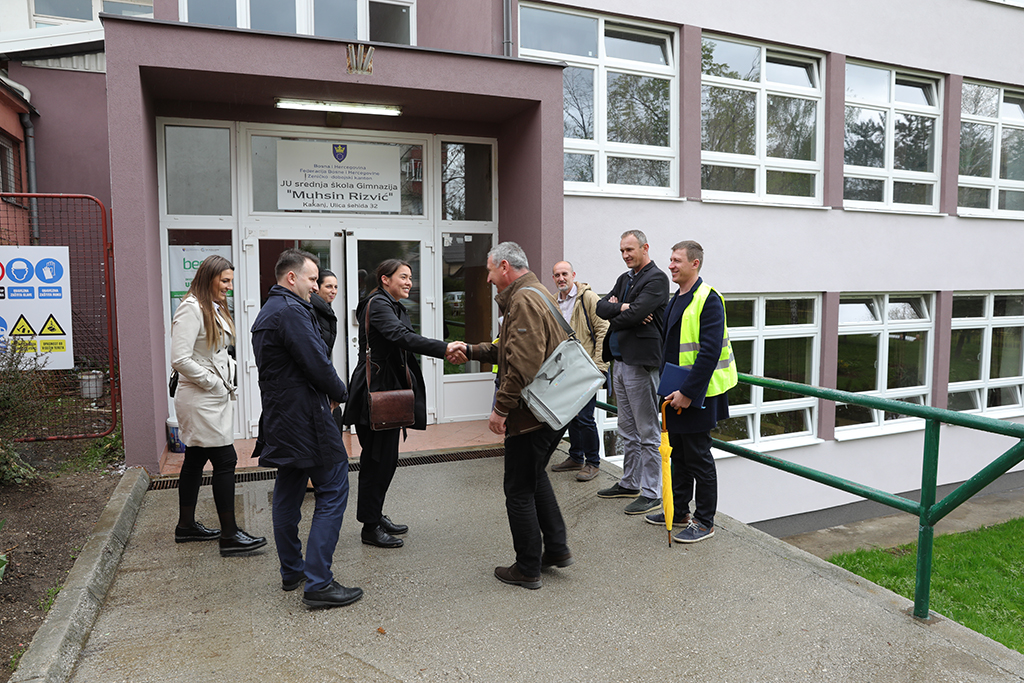
The World Bank delegation visited a renovated facility

Within the regular activities of the World Bank’s mission in Bosnia and Herzegovina, the delegation of this international financial institution, together with representatives of the Federal Ministry of Physical Planning, visited facilities that were undergoing construction and renovations.


During their tour, a visit was organized to the “Muhsin Rizvić” gymnasium in Kakanj, one of 15 educational institutions in the Federation of Bosnia and Herzegovina where construction has been under way since 2018.


This particular building in the last period has undergone several renovations including thermal insulation to the ceiling, replacement of the exterior openings, partial thermal insulation of the façade, and the construction of the final exterior facade layer.


On this occasion, measures implemented thus far were analyzed in detail, and the World Bank delegation expressed their satisfaction with the results achieved and discussed their future plans for the upcoming period.


Along with the “Muhsin Rizvić” gymnasium, within the framework of the Energy Efficiency Project for Bosnia and Herzegovina (BEEP), a total of 37 facilities have been renovated, 24 of which are educational institutions, 8 of which are health institutions and 5 of which are public facilities. In the implementation of energy-efficient measures, a total of more than 18 million KM has been invested, while savings are estimated at over 2 million KM per year and CO2 emissions are expected to be reduced by almost 5,000 tons per year.


In addition to financial savings, significant social benefits have also been achieved, such as warmer rooms, better lighting and better air quality. This contributes to reducing health problems and improving conditions for all users.


Opening ceremony for the renovated “Antun Branko Šimić” Elementary School in Mostar

Implementation of Energy Efficiency Measures Finalized on the School Building

The Elementary School “Antun Branko Šimić” in Mostar, recently underwent construction where joinery and locks were replaced, the heating system was improved, and thermal insulation of the exterior walls, ceiling and attic was added. All of these renovations represent energy efficiency measures which were implemented with the aim of achieving energy and economic savings, improving comfort, and reducing CO2 emissions.

Upon completion of the works and renovations on the school building, a ceremony was held that was attended by governmental representatives as well as pupils and teachers of the school.

Almost 900,000 KM was invested in the Elementary School “Antun Branko Šimić” in Mostar, and the estimated savings on energy costs amounts to almost 100,000 KM per year.


Renovations on this facility were implemented within the Energy Efficiency Project (BEEP), which, in addition to funds from the World Bank’s credit line, is being implemented by the Ministry of Physical Planning of the Federation of Bosnia and Herzegovina. Thus far, 37 public sector facilities have been renovated, 24 of which are educational institutions, 8 health institutions, and 5 public facility institutions. Through implementation of energy-efficient measures, a total of more than 18 million KM has been invested, while the savings are estimated at over 2 million KM annually. CO2 emissions have also been reduced by nearly 5,000 tons per year.


92 New Energy Managers in B&H

Workshops held in Sarajevo, Mostar and Zenica within the BEEP project

The Bosnia Energy Efficiency Project (BEEP), financed by the World Bank’s credit lines and implemented by the Federal Ministry of Physical Planning, aims to save energy, improve comfort in public buildings, reduce CO2 emissions, and increase energy efficiency awareness. In addition to the physical reconstruction work done within the public buildings, education also plays an important role in this project.


That is why a two-day education program for energy managers was organized in Sarajevo, Mostar and Zenica. These trainings were organized for members of public institutions, municipalities and cantons which were a part of the BEEP Project. The focus of the educational program was to stimulate the development of existing skills while developing new ones so participants can carry out energy managers’ tasks, and familiarize communities and cantons with activities in this area.


Overall, 92 candidates participated in the trainings. Upon completion of the training, the candidates were given a written test of knowledge, after which they were given certificates of attandence. They will work as energy managers in their energy-efficient workplaces throughout the Federation of Bosnia and Herzegovina.


The organization of such educational trainings is necessary to strengthen the existing capacities in the field of energy management and to promote energy savings achieved through the implementation of energy efficiency measures. Within this project, trainings like this one have been implemented since 2016, when the first BEEP project activities were launched.

Spring Cleaning Your Energy-Inefficient Habits

Besides the creative, decorative ideas, this spring, our positive energy should be used for changing old habits.

In addition to traditional spring cleaning, which includes getting rid of all the unnecessities in or lives, this year it’s time to clean up habits that bring us unnecessary costs. That’s why we bring you 5 tips from the energy efficiency field which will help you lower costs next winter.


  1. Think about changing your energy source

When it comes to changing your energy source, experts advise using renewable energy sources such as pellet instead of traditional heating methods. Although the biggest obstacle in switching to pellet is currently the price of the furnaces that burn them, which range from 2,500 BAM upwards, in the long run, such an investment represents significant savings for the household. At the same time, it drastically contributes to reducing air pollution and reducing CO2 emissions.


  1. New or additional insulation of the roof or attic

Experts from the field of energy efficiency point out that good insulation is of utmost importance. Quality insulation works both ways and can help keep a place warm during winter or cold during summer. There are many materials that can be used to insulate the roof or attic depending on your abilities and preferences. The most popular options are stone or glass wool and reflective film or clay slate that absorbs moisture well and is resistant to frost.


  1. Replace old windows

In addition to the roof and attic, another reason for heat loss in your home can be old and inefficient carpentry. Old window frames are often a main cause for heat loss, so their replacement is very important for maintaining the inside of a room warm. Nowadays, window frames are usually made of plastic, metal or wood. Since each of the materials has its advantages and disadvantages, today’s window production technologies try to minimize the negative properties of the material and extract the best from the positive ones. Thus, when fabricating a frame design for windows, these materials are often combined in order to achieve the most effective results. At the same time, when choosing a window, of course, beware of the quality of the glass.


  1. Install a programmed thermostat

More than 50% of a household’s energy is used for heating and cooling. The simplest way to reduce the cost of heating is to install a programming thermostat together with the heating system, which will shut the system down when it reaches the temperature you’ve set. At the same time, by reducing the room temperature by only 1 degree, you can save about 5% on your heating bill annually.


  1. Sealing windows

In addition to energy efficiency, sealing windows is also important for sound insulation and to keep outside particles, outside! Improving window sealings can be done as standard sealings with adhesive tapes and tires or sealing with silicone and aluminum strips. This way, heat loss can be reduced by up to 50%.

The World Bank reports on the Energy Efficiency Project in BiH (BEEP)

In order to present the results of the BEEP Project, representatives of the World Bank visited Mostar

The World Bank communications team visited two primary schools in Mostar, which have been part of the Energy Efficiency Project for Bosnia and Herzegovina (BEEP) for the past two years. The aim of the visit was to prepare a story about the results achieved at a national

level, with a focus on user experience.


That is why the World Bank Representatives talked to students, teachers and management of Elementary School ‘Strahimir Kranjcević’ and Elementary School ‘Ivan Gundulić’ in Mostar, as well as representatives of the public and private sectors.


The principal of ‘Strahimira Kranjcevića’, Daria Stojčić, who has been a part of this school’s collective for almost 30 years, explained the drastic differences in the comfort achieved by implementing energy efficient measures. “For a long time there were no investments in this school, until last year when energy efficiency measures were implemented. Replacing old carpentry, roofs, lighting fixtures, energy and boilers for heating, and adding thermal insulation, resulted in drastic comfort improvements. Working in the classrooms is now incomparably more pleasant to both workers and students of the school.”


Marija Juričić, the principal of Elementary School ‘Ivana Gundulića’ in Mostar, recalled the utmost importance of the implementation of energy efficiency measures for this school, given the fact that it is the largest in the area. “Work is still in progress, but we already feel the positive effects of the new façade and windows. Most importantly, construction work is not disturbing classes at all.” added Juričić.


Jasmina Hadžić, communications officer at the World Bank, expressed her satisfaction with the achieved results, which were also noticed by all users of the facility.