World Bank Delegation visits renovated facilities

Yesterday and today, the World Bank delegation visited the facilities of the Police Academy of the Federal Ministry of Interior in Sarajevo and the Faculty of Metallurgy and Technology of the University of Zenica, where energy efficiency measures were implemented.

Press release

GREAT ECONOMIC SAVINGS AND REDUCTION OF CO2 EMISSIONS

Yesterday and today, the World Bank delegation visited the facilities of the Police Academy of the Federal Ministry of Interior in Sarajevo and the Faculty of Metallurgy and Technology of the University of Zenica, where energy efficiency measures were implemented. These activities are part of the project “Energy Efficiency of BiH” (BEEP), implemented by the Federal Ministry of Physical Planning and funded by a loan from the World Bank.

“This visit is part of our regular activities, intending to continuously monitor the implementation of energy efficiency measures in public facilities that are part of the BEEP project. We can say that the works have been successfully realized, and we believe this project will be able to be further improved in the future. We are pleased that students will have adequate space that we think will encourage them to work, learn and achieve better results”, said Christopher Sheldon, World Bank Country Manager for Bosnia and Herzegovina and Montenegro.

The implementation of energy efficiency measures in public buildings began in 2016. By the end of 2020, 25,088,140.12 KM (including VAT) was invested in the renovation of 55 buildings of health, educational and other institutions. Estimated annual savings amount to 3,039,828 KM (including VAT) and CO2 emissions have been reduced by 4,564 tons per year.

“BiH has recognized the importance of energy efficiency, and to achieve economic sustainability, it has approached additional funding for the project” Energy Efficiency for BiH (AF BEEP) from World Bank loans. AF BEEP is a project of great importance in the entire process of BiH’s accession to the European Union. In the second phase of AF BEEP, it is planned to implement energy efficiency measures at 40 facilities, of which 25 have been renovated so far “, said Josip Martic, Minister of Physical Planning of FBiH.

The total value of performed works at the Faculty of Metallurgy and Technology of the University of Zenica amounted to 1,228,476.43 KM. Measures for thermal insulation of external walls and roof, replacement of external carpentry/locksmithing, partial change of lighting and installation of thermostatic valves, and replacement of thermal substation were carried out at this facility. These works saved a total of 613,473 kWh / year of thermal energy.

“These are the largest investments set aside so far for the works on building the Faculty of Metallurgy and Technology.” In addition to achieving significant savings and reducing CO2 emissions, we have created excellent conditions for students and their professors, which will undoubtedly contribute to the quality of the teaching process“, said Minister of Education, Science, Culture and Sports of Zenica-Doboj Canton Spahija Kozlic.

The FMUP Police Academy is also satisfied with the investments and works within the project “Energy Efficiency in BiH” (BEEP). According to experts, this building will also reduce energy consumption and CO2 emissions, which will amount to 425.3 t / CO2 annually. 944,207.97 KM was invested in this facility, and the estimated energy savings after the realization, on an annual level, amounts to 2,214,841 kWh / year.

“We at the FMUP Police Academy are satisfied with what has been done. Thermal insulation of façade walls was done, existing carpentry and locksmithing was replaced, roof and ceiling thermal insulation was done, dynamic thermostatic valves were installed, lighting fixtures were partially replaced, and by installing calorimeters, temperature and humidity sensors, we had the opportunity to monitor savings are more than obvious”, believes Damir Vejo, director of the Academy.

The visit ended with a discussion on ways to improve the implementation of the project itself, which in the future would facilitate the entire process of implementing energy efficiency measures, both for users of facilities and contractors.

Investments in energy efficiency will reduce energy consumption in selected public sector facilities and demonstrate the economic viability of improving energy efficiency, including reducing current energy costs and related public expenditures.

Let spring bring higher air temperatures and lower bills to your home

Let spring bring higher air temperatures and lower bills to your home


This article will look at how it is possible to do many little things in the spring, which will ultimately bring significant benefits to your homes’ energy efficiency and the number of bills.


During the winter days, we all want to heat our homes as well as possible while saving as much money as possible. However, we also want to save some money in our wallets in the spring, and here are some valuable tips on achieving this. In winter, to save money, it is enough to reduce the thermostat by one degree to save five percent of energy, but you can do it also in spring and summer because during the day you can completely turn off the heating or put it in weaker mode. In the spring, ventilate your home often for natural cooling. Open the windows in the evening to fill the space with cooler air, which will make your sleep more comfortable and your wallet fuller at the end of the month. There are a few more useful tricks. Stop washing dishes by hand. Did you know that your dishwasher consumes less water than a manual dishwasher? Use the dishwasher only when it is full of dishes. Please avoid the dishwasher drying program as it consumes extra energy. You will also save money by connecting the dishwasher to a hot water connection instead of cold water, as most of the energy is spent on heating the water. This is especially recommended if you heat water with solar collectors or a gas boiler.


In the spring, use as much natural light as possible. Always make sure you turn off lights you don’t need regularly. It is nice to have fleshy green plants like cactus in the living space because they are excellent air purifiers. This was confirmed by NASA, which found in its research that these plants can eliminate up to 87 percent of harmful substances found in paints and varnishes. In addition, houseplants improve concentration and memory and reduce stress. These plants also eliminate toxins such as formaldehyde and benzene, primarily found in carpets, cigarette smoke, plastic bags, books, etc. Always buy energy class A household appliances because energy class A appliances and lighting fixtures consume up to 40% less energy than the same energy class D appliances.


Today you can get washing machines that wash from 3 to 7 kg of laundry. So please choose the one that suits your washing needs and use it according to the manufacturer’s instructions. Washing a full laundry drum is much more energy-efficient than two washes of a half-filled drum. In the case of an overloaded drum, the laundry will not be washed properly. Always choose a laundry program with the lowest water temperature enough for your laundry to be cleaned properly. Remember that today’s laundry detergents successfully remove impurities even at lower washing temperatures. If possible, always use the washing machine at lower rates. Also, the spring period is ideal for resting your dryer. Whenever you have the opportunity, dry your laundry on the balcony. Warm spring days will help you with that, and in addition to saving, you will also get a wonderful scent of freshness.

Increase the energy efficiency of your home and you will increase the benefits for the environment and your health

It seems sometimes to you that as individuals you cannot change anything, but you have to know that this is not true.


It seems sometimes to you that as individuals you cannot change anything, but you have to know that this is not true. Today we are witnessing great floods in the world, high temperatures causing forest fires, air pollution that takes many human lives, and all this was contributed by a man who was irresponsible towards nature and lifestyle. Air pollution is one of the world’s greatest environmental risks to human health. The World Health Organization (WHO) estimates that 91-99% of the world’s population lives in places where air quality exceeds WHO recommended guidelines. According to recent WHO statistics, BiH has the highest mortality rate due to indoor and outdoor air pollution in Europe and the second highest in the world. Outdoor air pollution is usually most pronounced in urban centers. For example, in Sarajevo, permitted particle limits are often exceeded 60 to 90 days a year, sometimes up to 200 days, causing significant health problems.

It is time to take small steps now that can bring significant climate and health benefits to you and your environment in the future. Wondering how? For example, if you improve energy efficiency in the house, you can significantly reduce emissions from energy use, improve the quality of outdoor and indoor air and positively affect your own and the health of people around you. Scientific studies have shown that air quality is twice as good in energy-efficient houses than in houses that are not. People who work in energy efficient buildings are less likely to suffer from fatigue, headaches or skin irritations, and are much more productive at work.

Heating mistakes you should avoid during the winter

The heating bill is like some sort of mystery.


The heating bill is like some sort of mystery. Whatever you do, even if you recently changed and upgraded the heating system in your home, the bills remain relentlessly high. If you’ve encountered this problem, we have a couple of simple but useful tips. Seemingly insignificant things can hurt your heating performance. Avoid a couple of mistakes you probably don’t even think about but often do, and you’ll see a significant decrease in your bill. There’s no mystery, all the wisdom is in a couple of minor things that can save you money.

Thermostat

The most common mistake people make, in hopes of heating their homes during those cold winter days is increasing the thermostat. When you get home “escaping” the low temperatures you want to warm up as soon as possible, so you don’t hesitate to increase the thermostat to extremely high temperatures. However, there are several problems with this practice. First, it’s irrelevant if you set your thermostat tens of degrees higher: your heating system can only work at max capacity, not faster, better, or stronger than the max. Secondly, if you forget to turn the thermostat back down to a “normal” temperature, your heating is going to be running longer than planned, wasting energy.

Just as it’s not good to turn up the thermostat extremely high, it’s also not good to completely turn off the heating. You were probably tempted into turning it off while you’re at work or on the mountains, to save money. This, however, will result in your home significantly cooling off and when you return, your heater will have to work for a long time to overcome the huge drop in temperature. It is much more practical and cost-effective to set the thermostat to a relatively low temperature so that your heater periodically turns on maintaining at least minimum heat.

Draft

Although many people think that draft is only a myth when it comes to that topic it’s better to stick to the traditional Balkan “fear of draft” and be careful that multiple doors and windows aren’t open at the same time. Other than that, closing curtains and blinds can help your home retain heat when the sun goes down. This is especially true for energy-efficient window treatments, such as thermal curtains. Just don’t forget to reopen the window during the day – that’s necessary to clean out the stagnant air in the rooms.

Some people, in an attempt to control the temperature in a different part of their homes, will try and close up ventilation openings in certain rooms. Unfortunately, this impairs the ability of their heating system to work efficiently. Your system is designed to “naturally circulate”. Plugging vents disturbs the balance and increase air pressure in the air ducts.

Maintenance

Finally, by no means should you neglect routine maintenance. Heaters can accumulate a lot of dust and dirt, especially if you don’t change the air filter regularly. Accumulation of dust and dirt can have a significant negative impact on your heating system and even cause the thermostat to “crack”.

Avoid these seemingly small, insignificant mistakes and you will see for yourself how before your eyes, this eternal mystery of high bills is solved in your favor. Bills will be significantly lower, but not only that. Your heating system will be far safer, more reliable, more efficient, and you will be warmer, smiling, and with more money in your pockets.

The Importance of Implementation of EE Measures in Public Sector Buildings

One of Bosnia and Herzegovina’s strategic priorities is joining the European Union


One of Bosnia and Herzegovina’s strategic priorities is joining the European Union. BiH’s Stabilisation and Association Agreement went into force in 2015 to intensify the work and commitment of all institutions regarding a significant number of obligations that BiH has undertaken by signing this and all other agreements in the process of joining the EU. Even though the energy efficiency sector is one of the most prominent sectors with a great potential for sustainable and comprehensive socio-economic development of Bosnia and Herzegovina, it is still necessary to approach its development strategically. Therefore, one should consider all possibilities and resources that BiH currently has and opportunities for improving and resolving current shortcomings. 

Buildings in BiH are primarily old, heating and cooling systems are outdated, and the majority of them lack insulation. Therefore, in addition to the potentials for energy savings, by improving energy efficiency (EE), public and housing facilities also have a significant potential to reduce greenhouse gas emissions through the implementation of measures to improve heating systems and replace energy sources, without disrupting working and living conditions and at the same time saving the costs. Examples of projects implementing EE measures throughout the world imply that a critical factor for implementing EE programs is to design educational activities, and inform and raise people’s awareness about the importance of energy efficiency in protection of the environment. According to the World Health Organization last year’s report, environmental health risks in Europe cause 1.4 million deaths per year. The majority of these deaths could be prevented, given that environmental pollution results from human activities. 

To achieve energy, environmental, and economic sustainability and join the European Union, Bosnia and Herzegovina started financing BiH Energy Efficiency Project (BEEP) with the loan from the World Bank, that is, the International Development Association (IDA). Through the Implementation Unit of the BEEP Project, the Ministry of Spatial Planning of the Federation of BiH is responsible for the preparation, coordination, management, and implementation of the Project in the Federation of BiH, including education of the broader audience on this topic. 

The main development goal of the BiH Energy Efficiency Project is to present advantages of improving EE in public sector buildings and to support the development of scalable energy efficiency financing models. The Project is dedicated to refurbishing and insulating public buildings; from 2016 to 2020, the EE measures are successfully implemented on 55 facilities in the Federation of BiH, whose renovation cost 25 million BAM. Some of the results achieved by 2020: estimated savings of 17.716.570 kWh/yr., improved living conditions for more than 457.009 users, 1.325 new green jobs, the average investment of 456.148 BAM per building, CO2 emission reduced to 4.564 t/yr. In addition, new models for financing scalable mechanisms and building market capacities were prepared to develop flexible models for EE financing through the implementation of all requirements needed for establishing the Revolving Fund within the Ministry.


Since the Project has achieved outstanding results during the implementation period, such as numerous insulated public buildings and establishing the Revolving Fund, the activities were continued through the Additional Financing project (AF BEEP). AF BEEP  is the extension of the central Project (BEEP), which should eventually result in approximately 100 renovated buildings. Therefore, the AF BEEP project has been extended until 2024. 

“I am glad that we continued implementing the AF BEEP project and reconstruction of public buildings in the Federation of BiH. Considering that we are renovating very old public buildings, we are more than satisfied with what the World Bank’s Project has achieved so far. Energy efficiency is one of the basic measures of protection against excessive air pollution, present throughout BiH, especially during winter. The implementation of EE measures has multiple advantages. First of all, we are improving working and living conditions for all users of renovated buildings. Besides that, we are achieving significant energy savings and ultimately reducing air pollution, which is important for the health of the whole society,” said Josip Marić, the Minister of Spatial Planning of the Federation of BiH. 

EE measures will be implemented in thirty additional educational institutions, nine health centers, and one police academy in the next four years. Regarding geographical distribution, thirty of these buildings are in the Zenica-Doboj Canton, two are in the Tuzla Canton, four are in the Herzegovina-Neretva Canton, and four are in the Sarajevo Canton. 

By implementing EE measures in public sector buildings, budget users will benefit from significant financial savings and reinvestments, domestic labor force employment, environmental protection, and improved working and living conditions. In addition to projects like this one, the support of each individual is also essential, for they can contribute to a healthier environment by applying EE in everyday life: at school, home, and work. 

Ways to save energy during the holiday season

There are simple ways to be energy efficient while celebrating the most beautiful time of the year, including energy-efficient decorations, baking several dishes at the same time, smart heating and similar things.


The season of decorating your home, enjoying delicious treats and celebrating with family and friends is slowly approaching. Holidays are also a time when electricity consumption often increases, which has a significant impact on your finances, but also the environment. It is easy to forget about the awareness of energy savings as we decorate our homes and cities in a festive spirit. But we all prefer to spend money on gifts and festive decorations, rather than on high bills. There are simple ways to be energy efficient while celebrating the most beautiful time of the year, including energy-efficient decorations, baking several dishes at the same time, smart heating and similar things. We bring you practical tips to help you enjoy the holiday spirit without worrying about excessive energy consumption.


LED light bulbs

Lighting is a big part of holiday decorations for many, both inside and outside the house. Product innovations, such as LED decorative lamps make holiday lights safer and require less energy consumption. When it comes to energy-efficient decorations, LEDs consume significantly less electricity than ordinary decorative lamps and last much longer. This automatically means less waste in landfills because you don’t have to change them often.


Food preparation

Your oven consumes a lot of energy, especially for baking holiday cookies or large holiday meals. Your cooking can become more energy-efficient if you prepare several dishes at the same time, shortening the time of turning on your oven. Group the dishes to be cooked/baked at the same temperature. Resist the temptation to open the oven door and check your baking process. The temperature can drop by up to 25% each time you open the oven door. Additional tip: if you put the lid on your pot, what’s inside will boil faster, and your food will cook more evenly, using less energy.


Heating

As colder temperatures come inside your home, you often increase the heating temperature to keep warm. This year, find other ways you can prevent the cold. Having guests during the holidays can increase the temperature in your home. At these times, reduce the heating temperature. Also, keep blankets around the house and use them to keep you warmer during day and night. Although the sun doesn’t always shine during the colder months, there are still days when it reaches our homes, so take advantage and open your curtains and use the sun’s heat to warm your home.


Holiday travel

Did you know that many electronic devices use energy even when turned off? These energy “vampires” suck in energy without you even knowing it. Even when not in use, because they are not actually out of the energy socket “vampires” use the standby option. Most household appliances automatically switch to this standby mode, allowing them to turn on quickly. This subtle use of energy noticeably affects the total amount of energy consumed in your household, so don’t forget to take all your appliances out of the sockets when not in use, especially when you go on the road.


Shopping

Holiday shopping is often chaotic and, besides the financial cost, it can damage the environment. Namely, thousands of paper and plastic bags end up in landfills after mass purchases during the holiday season. Instead, always carry reusable bags with you to reduce this type of waste. Also, plan your shopping wisely to reduce more trips to the store and use of the car. In this way, you contribute to cleaner air but also significant fuel savings. Additional tip: When packing your gifts, consider using recycled paper. You can create your own wrapping paper using newspaper articles or magazine clippings.


With these practical tips for saving during the holidays, such as energy-efficient decorations, smart shopping and food preparation, you can celebrate the holidays without worries. Not only will these tips help you save money, but they will also benefit the environment.

5 ways to lower your water bill

We bring you five simple tips that you can use every day in your household and thus reduce the monthly cost of using water.


Water is a necessary need of every living creature. The human body consists of a large amount of water, and as much as 85% of the water is found in the body of a newborn baby and about 50% in the elderly. Doctors recommend that you drink at least eight glasses of water a day. In addition to drinking, we use water every day for cooking, cleaning and bathing. Therefore, no one can avoid the use of water.


Drinking water is becoming rarer and more expensive due to the growing need for it due to increased population growth. As we use water more and more, the cost of water increases. That is why we bring you five simple tips that you can use every day in your household and thus reduce the monthly cost of using water.


Repair leaks


Water leakage should not be underestimated as it can often be the reason why your water bill is always high. Dripping tap water may seem harmless, but if it is continuous, it can lead to the loss of several liters of water per day, which ultimately increases your monthly consumption bill. A proven way to reduce your water bill, in the long run, is to fix water leaks as soon as they occur. Some causes can be easily removed, while for others, you may need the services of a qualified plumber. In addition to saving you money by reducing your water bill, repairing leaks also protects your home from major damage that can cost a lot.


Don’t forget to turn off the water


Most people have a habit of letting water flow even when they are not using it. When brushing your hands or teeth, try to turn off the water before rinsing. This way, you can save up to five liters of water per person per day. This should also be the case when washing dishes, so while cleaning your dishes, turn off the water until you need to rinse them.


Bathing or showering?


We consume the most water when bathing and showering. We advise you to practice showering because you can consume up to 50 percent less water than bathing in a bathtub. It is important to consider the shower duration (the optimal time is five to seven minutes) because each additional minute consumes 20 to 40 liters of water.


Use a dishwasher


Hand washing can consume more water than a dishwasher, so the average machine consumes up to 6 liters of water per cycle, while water usually flows from your tap at a rate of 2 liters per minute. If you need more than 3 minutes to wash the dishes, it is better to use a washing machine. In order to save on the cost of electricity and electricity costs, an additional tip is to properly fill the dishwasher (as well as the washing machine). When you start the machine only when it is full, you reduce its number of revolutions, thus reducing energy and water consumption.


Water reuse


Like you, plants desperately need water. There are many ways you can save water consumption, and one of them is to reuse the water you use in your household to water your plants. You can use unused drinking water, collect water in a bucket while taking a shower, or use it to save water when it rains and use it to water your garden.


We can’t survive without water, but without high water bills, we certainly can, and with a few tips we’ve shared with you, you can achieve that in no time. Even if something saves just a few liters of water a day, keep in mind the end goal. With several different steps to reduce water consumption, you can make significant changes to save money each month.

5 interior design ideas for a more energy-efficient home

We bring you five tips/ideas to avoid costly mistakes and even save money every month.


Choosing the interior design in your home can have a positive impact on its value, but it also has many benefits that will pay off in the long run. By improving energy efficiency in your home, you can save money but also reduce gas emissions. Steps to a more energy-efficient home can sometimes require a greater investment, such as installing insulation or upgrading a heating system, but on the other hand, smartly choosing furniture positioning or simply replacing ordinary light bulbs with LED lighting can also save significantly. We bring you five tips/ideas to avoid costly mistakes and even save money every month.


Think of natural light


By maximizing natural light in your home, you will create a much more comfortable feeling while reducing energy consumption. An easy way to increase the amount of natural light in your living space is to smartly position the mirrors, ideally placing them opposite the windows to amplify the natural light. The color of your curtains also significantly affects the amount of sunlight in the rooms you stay in, so choose lighter curtains during the summer to prevent direct heat from the sun and replace them with darker ones during the winter to retain as much heat as possible. Hang the curtains as close to the windows as possible to increase their effectiveness.


Don’t forget about air circulation


If your furniture blocks the ventilation openings, move it to another location. Ventilation openings must be exposed to adequate air circulation throughout the home. Dense furniture, such as bookshelves or high-back sofas, is a significant thermal barrier when placed next to exterior walls or heating systems. It may seem obvious, but putting furniture in front of the radiator will prevent the heat from spreading around the room. This causes the radiator to run more or use more energy to heat the room and thus increase the electricity bills.


Benefits of “green” decorations


In addition to making your home warmer and more aesthetically pleasing, decorating with plants brings endless benefits, from improving air quality to improving your mood. There are many types of houseplants that contribute to this, such as bamboo palm, which is a natural humidifier; English ivy, which relieves asthma and allergy symptoms; and Boston fern, which is considered one of the best air purifiers.


Change the lighting in the house


In addition to the thermal energy coming from the sun or energy for heating, we mainly use electricity in the house, which we tend to waste most of the time. To save on the lighting you use, we advise you to replace all light bulbs with those energy-saving or LED bulbs. Although they cost more, the long-term result is greater money savings and a longer lifespan because these types of light bulbs last 8 to 12 times longer than ordinary light bulbs. Almost all of the energy consumed by energy-saving and LED bulbs is directed towards giving light, as opposed to regular incandescent bulbs, which convert a large part of the energy into heat.


Energy-efficient home appliances


Home appliances such as refrigerators, freezers, stoves and washing machines or dishwashers, which are often used, are also the biggest consumers of electricity. The right choice of large and small home appliances can have a significant impact on the energy efficiency of a home. Compared to standard appliances, high-energy home appliances (labeled A, A +, A ++ and A +++) use 10 to 50% less energy. In addition, they help reduce greenhouse gas emissions. If you have some old devices that you have been using for many years, this is an ideal opportunity to replace them with new, more energy-efficient ones, which will be your initial cost, but a long-term investment and savings.


With these practical tips and smaller or larger investments, you can save money in the long run and do a lot at the same time, not only for your home budget but also for environmental protection. In addition to a smaller electricity and water bill, your home will be more comfortable to stay in, but you will also contribute to the conservation of energy resources and cleaner air. By improving energy efficiency, we improve the comfort of our home, but also the quality of life.

Contracts signed for the Reconstruction of Five Public Buildings in the Herzegovina-Neretva and Sarajevo Canton

Within the AF BEEP project (Additional Financing for the Energy Efficiency Project for Bosnia and Herzegovina), four more facilities in Herzegovina-Neretva Canton and one in Sarajevo Canton will be reconstructed in the coming period to better its energy efficiency.

Four public buildings in Mostar and one in Sarajevo will become energy efficient


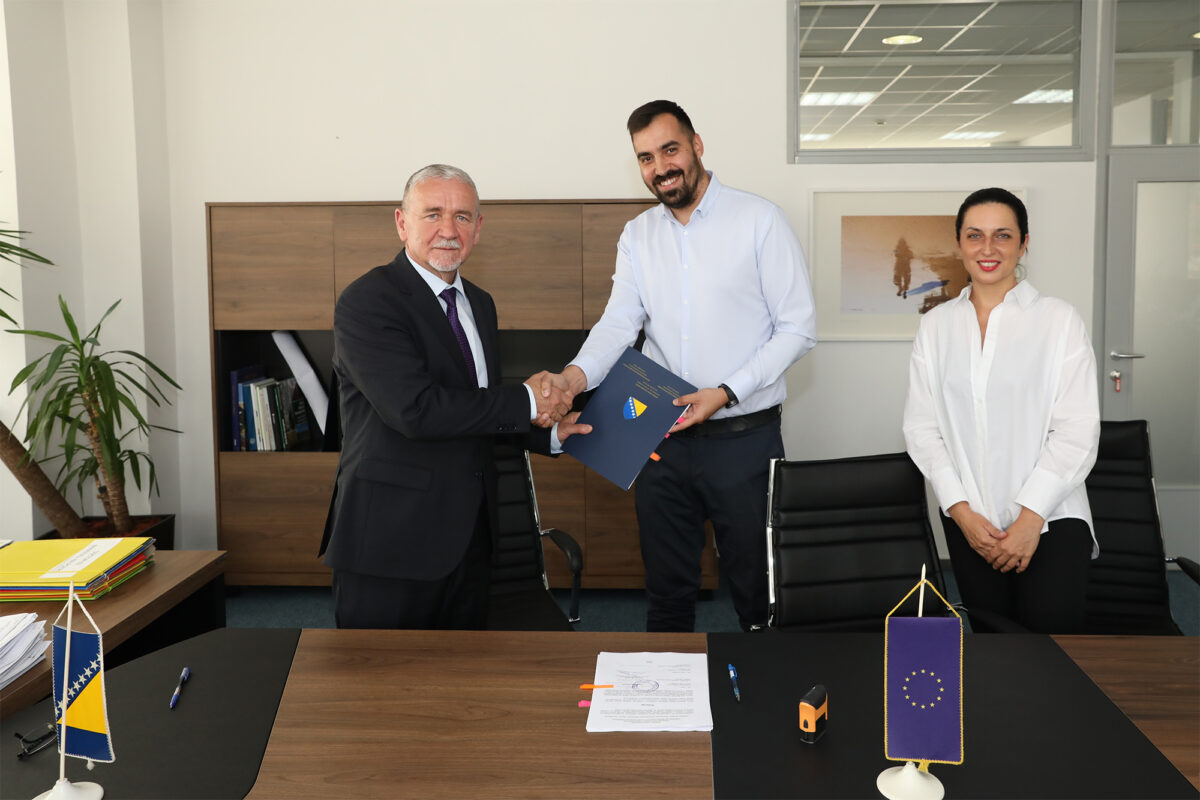
Within the AF BEEP project (Additional Financing for the Energy Efficiency Project for Bosnia and Herzegovina), implemented by the Federal Ministry of Spatial Planning, with the World Bank loan funds, four more facilities in Herzegovina-Neretva Canton and one in Sarajevo Canton will be reconstructed in the coming period to better its energy efficiency. On that occasion, contracts were signed today between Josip Martić, the Federal Minister of Spatial Planning of BiH, and representatives of selected contractors.


Four public buildings in Mostar, where energy efficiency measures will be implemented, are the Clinic for Physical Medicine and Rehabilitation, the Clinic for Infectious Diseases, the Clinic for Skin and Venereal Diseases and the Center for Clinical Pharmacology, and the Clinic for Internal Medicine with the Dialysis Center in Mostar, as well as the building of the Police Academy in Sarajevo. More than 2 million BAM will be invested in the renovation of these facilities.


“Project results that have been achieved from the beginning of its implementation in 2016 until today clearly indicate how much energy efficiency measures contribute, not only to the quality of public institutions in which they are implemented, but also to savings of cantonal funds in which they are implemented. As part of the project, 13 public buildings in the Herzegovina-Neretva Canton have been renovated so far, with investments in the amount of almost 9 million KM. In addition to the fact that these measures significantly contribute to the protection of the environment, living conditions and use of these facilities have been improved for their users,” said Josip Martić, Federal Minister of Physical Planning of BiH.


Work such as thermal insulation of walls and roofs, replacement of carpentry and facade, replacement of lighting fixtures with more energy efficient ones and replacement of energy sources will, among other things, be done as part of the implementation of energy efficiency measures at these facilities.


In the period from 2016 to 2020, the implementation of energy efficiency measures at 55 objects in the Federation of BiH was successfully completed within the Project, with over 25 million BAM invested. By 2020, some of the results achieved are: estimated 17,716,570 kWh of savings per year, improved comfort for over 457,009 users, 1,325 green jobs created, CO2 emissions reduced by 4,564 tons during the year.

How to reduce your carbon footprint?

If you are wondering what a carbon footprint is and why it is so important, keep reading. We have researched the best ways to reduce carbon emissions. Every one of us can contribute and reduce our carbon footprint.


If you are wondering what a carbon footprint is and why it is so important, keep reading. We have researched the best ways to reduce carbon emissions. Every one of us can contribute and reduce our carbon footprint. This will save you money and time, help you avoid traffic, reduce pollution, improve air quality and help you enjoy a healthier and more active lifestyle. To begin with, let’s learn that the carbon footprint stands for the total amount of greenhouse gas emissions that result from the production, use, and end of life of a product or service. Usually, most of an individual’s carbon footprint comes from transportation, housing and food.


You can reduce your carbon footprint and help the environment in many different ways. Whether at home, at work, at school or while traveling, small changes make a big difference. AF BEEP project experts (Additional Funding for the Bosnia Energy Efficiency Project) advise you on the most effective ways to do this.


What type of transportation do you use?


Let’s start with transportation. Let’s be realistic; you’ll probably still need to use a car, but when you do, here are some tips on how to make your trip more climate-friendly.


Use gasoline and brakes slowly – efficient driving can help reduce emissions. Service your car regularly to make it more efficient. Check your tires because if the tires are inflated properly, emissions can be reduced. Use cruise control on longer journeys – in most cases, this can help save fuel. Use alternative transportation (bus, train or bike) to get to work at least one day a week. Enjoy the opportunity to catch up on reading instead of trying your patience in traffic!


What do you eat and drink?


Stop buying water in plastic containers. Get a reusable water bottle and keep it with you at all times. You will save money and the environment! Eat more fruits and vegetables and less meat. Meat and dairy products are responsible for 14.5 percent of global man-made greenhouse gas emissions. Each day you give up meat and dairy products, you reduce your carbon footprint by 8 kilograms – that’s 2,920 kilograms a year. You can start by joining the so-called “Meatless Mondays.”


Choose organic and local foods that are in season, and reduce food loss by planning meals ahead of time, freezing excess, and reusing leftovers.


What are you wearing?


Don’t buy fast fashion. Trendy, cheap items that go out of style are quickly dumped in landfills, where they produce methane as they decompose. Instead, buy quality clothes that will last. Better yet, buy vintage or recycled clothes.


Wash your clothes in cold water. Enzymes in cold water detergent are designed for better cleaning in cold water. Washing your laundry twice a week in cold water instead of warm water can save up to 500 kilograms of carbon dioxide each year.


Where do you live?


Give your home an energy audit. This will show how you consume energy and help identify ways to be energy efficient.


Replace ordinary bulbs with LED ones. Although LED bulbs cost more, they consume a quarter of the energy and last up to 25 times longer. Turn off the lights when you leave the room and turn off your electronic devices when not in use. Every little action counts!


By installing a low-flow shower, you can reduce hot water consumption and save 350 kilograms of CO2. A quicker shower also helps.


Simple actions really add up when everyone joins! The decision to take action means you want to take care of what you call home, making your city greener and healthier to live in. If you do your part, you have already done enough!