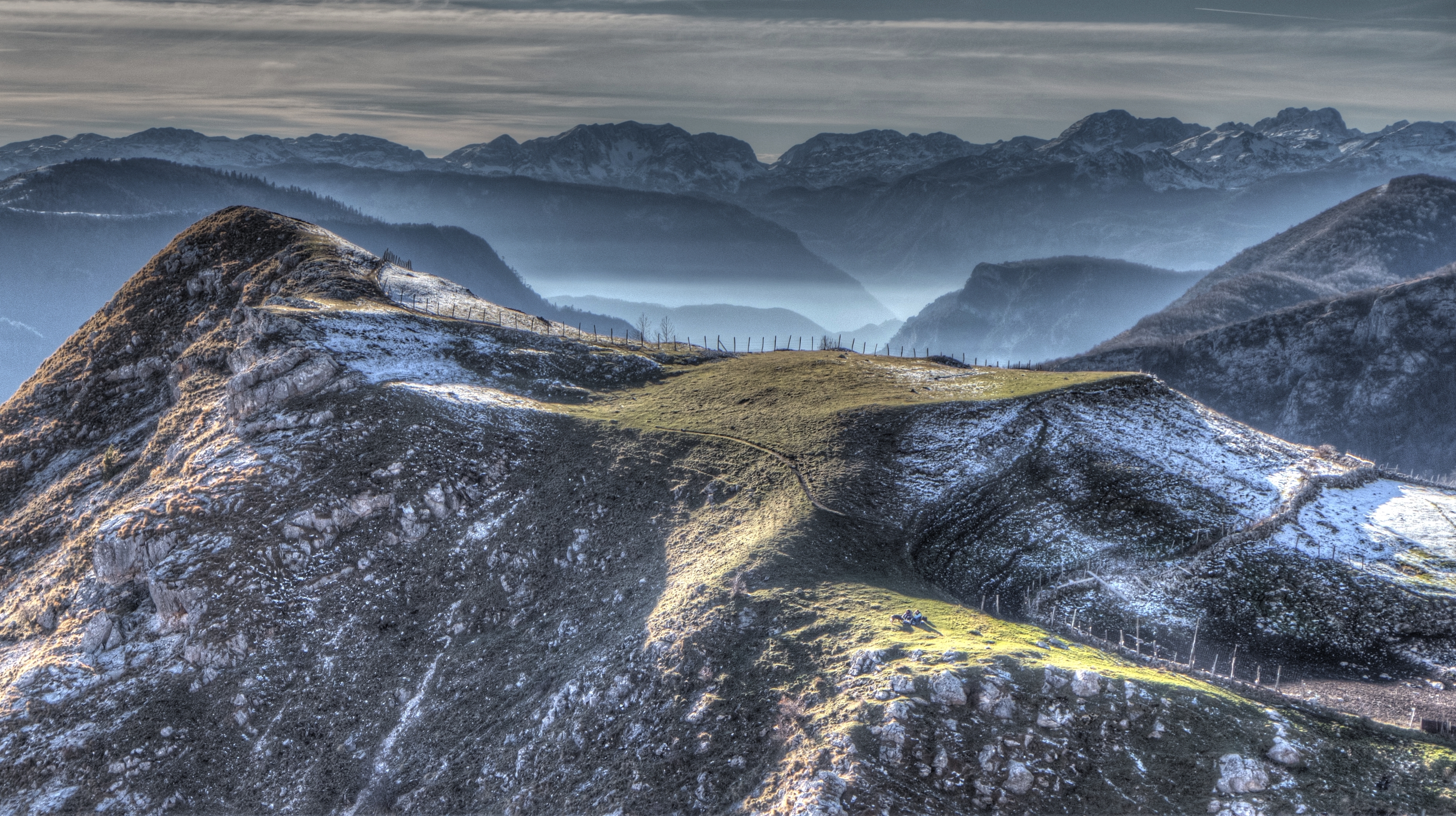
Today is International Mountain Day

Do we care for BiH’s highest peaks?


Maglić, Bjelašnica, Zelengora and Prenj are just some of the many elevated parts of the Earth’s crust that are located in our mostly mountainous country. Being located in the central part of the Balkan Peninsula, BiH and its mountains have been subject to various civilizations throughout history that have surely left their mark . Up until modern times however, not a single generation has left an indelible mark on our planet’s climate much like ours.


As the increase in average temperatures has a direct impact on the melting of snow and ice caps, this leads to changes in flora and fauna as well as changes in ecosystems of mountainous areas. As a matter of fact, the mountains are considered the earliest indicators of climate change. That’s exactly why, for the past 15 years, International Mountain Day has been celebrated on December 11th as a method of increasing global awareness about the importance of mountains and their potential.

As one of the consequences of climate change, glacier melting threatens mountains as well as their populations which is up to a billion people worldwide. In addition to the population, high areas are home to a large number of plant and animal species, not to mention 70% of the worlds fresh water.


Just as the world’s mountains are being threatened by climate change, so are the mountains in Bosnia and Herzegovina.


One of the consequences felt in our area is certainly an increased risk of floods, especially in the northeastern part of BiH, where during May 2014, the most catastrophic floods in the history of the country were recorded.

In order to protect our mountains and future generations and leave Earth in the same state in which we enjoyed it, we need to reduce our carbon footprint and the amount of CO2 emissions we produce on an annual basis.


Contrary to popular opinion, achieving this goal is not necessarily troublingly or demanding. Reducing electricity consumption, walking or biking instead of driving cars, using renewable energy sources and recycling are just some simple habits that our planet can significantly benefit from.


The situation is rather alarming, and we would not want global warming to ruin some of Bosnia’s most beautiful gems, right? That is why we need to act now!

Agreement signed for the Reconstruction of Five New School Buildings in the Zenica-Doboj Canton

Better conditions for students and employees of these institutions


Sarajevo, November 23rd 2018 Within the Bosnia Energy Efficiency Project (BEEP), which is implemented by the Federal Ministry of Physical Planning and financed through the World Bank credit line, another five school buildings in the Zenica-Doboj Canton will receive new energy efficient features.


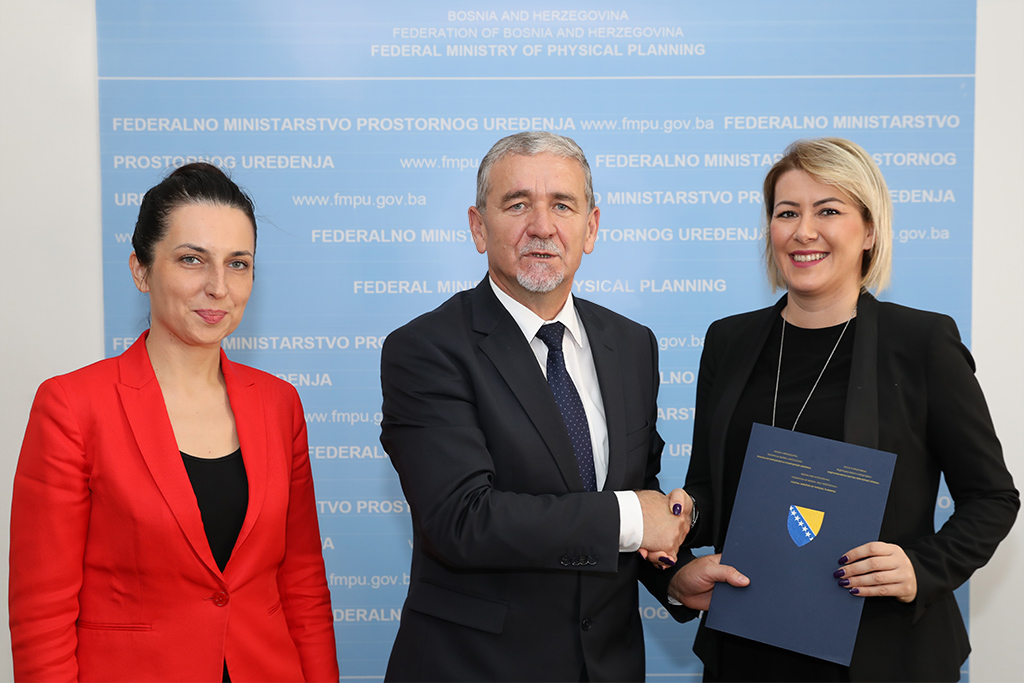
On this occasion, an agreement was signed between Josip Martić, the Federal Minister of Spatial Planning in BiH and representatives of the company “ITC” d.o.o. Zenica who were selected as the official contractors of the projects.


A little more than 1,200,000 BAM will be invested in the buildings and reconstruction is expected on the following institutions: “Vladimir Nazor” Elementary School Zenica, “Gymnasium” Visoko, “Second Primary School” Zavidovići, “Stjepan Radić” Secondary School Usora, and Gymnasium “Muhsin Rizvić” Kakanj. All works will be implemented in accordance with international standards in the field of energy efficiency. After the realization of the projects, besides significant savings in energy costs, a significant reduction of CO2 emissions is expected.


“In the past period through the BEEP project, eleven facilities were renovated in the Zenica-Doboj Canton, ten of which were primary and secondary schools and one of which was a hospital. Nearly 4 million KM were invested in these facilities and savings are estimated at almost 1.4 million BAM. This alone is sufficient information to show how successful cooperation has been. I am very pleased that students and employees of these public institutions will feel an increase in comfort while savings are also expected with regards to monthly costs.” – said the Minister of Spatial Planning, Josip Martić.


Reconstruction on these facilities, which includes window replacements, thermal facade installation, roof repairs, replacement of exterior carpentry, installation of boilers that use better energy sources and replacement of existing LED lighting are expected to greatly improve conditions in these institutions.


How to Heat your Home this Winter

There has been an increasing trend in the use of energy efficient heating


With the coming of long, cold winter days, for many comes the struggle of choosing between the comfort of a warm, cozy room and the rise of their maintenance bills. That is exactly why, during this period, we follow tips and tricks about economical home heating. Moving furniture away from heat sources and lowering the temperature on our thermostat are just a few tips that are often proposed. Are we, however, considering the efficiency of our heating systems and its impact on the environment? What can we do to simultaneously save money and reduce air pollution while subsuquently reducing the amount of smog that we expect this winter?


Central and electrical heating are among the most commonly used heating systems in urban centers. It is important to note that these systems have not been changed for decades and are almost always used in apartment buildings where tenants are not given a choice. In addition to other problems that come with these forms of heating (such as the inability of regulating temperatures and high costs), both these heating systems are also enormous air pollutants.


On the other hand, in rural areas where there are almost no gas pipelines, we mostly encounter wood heating, which is used by 42 percent of the Western Balkans. Just like the previously mentioned heating systems, even wood heating does not always offer the possibility of setting temperatures, but low wood prices are one of the main reasons why people still prefer this option.


At the same time, experts advise that instead of the listed traditional heating methods, we need to use renewable energy sources such as pellets.


Pellets in particular are obtained from different types of organic material such as sawdust and are produced under extremely high pressure. Due to this process, chemicals are not added to the mass and pellets are considered to be the cleanest fuel for everyday use, completely harmless to human health and the environment.


Currently, the biggest barrier in transitioning to heating with renewable energy sources such as pellets is the cost of furnaces that burn them which range from about 2,500 KM upwards. This investment in the long run represents significant savings for the household and drastically contributes to the reduction of air pollution, said Jasmina Katica, Head of the Department for Energy Efficiency in the Federal Ministry of Physical Planning. She added “Energy efficiency today is an important issue locally and internationally. Everyone of us who uses non-renewable energy sources such as gas or coal contributes to the increase in atmospheric pollution directly or indirectly. Implementing energy efficiency measures reduces electricity and heating bills and also enables us to reduce CO2 emissions, thus increasing the quality of the natural environment.”


There is also encouraging statistical data from the European Biomass Association AEBIO, which lists BiH as the fastest growing economy with regard to the use of biomass in Europe, and compared to last year, the production of certified pellets has increased by as much as 20 percent.


Of course, it is also important to note that there are other energy efficiency measures that also help save energy and protect the environment, such as thermal insulation of walls, as well as the use of energy efficient windows and doors.

The Federal Government approved the continuation of the Bosnia Energy Efficiency Project (BEEP)

The World Bank approves the use of credit funds


Sarajevo, 20.11.2018 The Federal Government has approved a loan for the Federation of BiH under the Loan Agreement between BiH and the International Bank for Reconstruction and Development (IBRD), a World Bank institution, for the implementation of the Bosnia Energy Efficiency Project in the amount of slightly over 16 million euros. This makes up 60 percent of the total amount of approved funds for BiH which amounts to almost 30 million euros.


The development goal of this project is to demonstrate the advantages of improving energy efficiency in public sector facilities and to support the development of flexible finance models. In the past two years within the BEEP project, 37 facilities from the public sector have been renovated, of which 24 are educational institutions, 8 are health institutions, and 5 are public facilities. Through the implementation of energy efficient measures, a total of 18,347,847.22 KM was invested, while savings are estimated at 2,022,270.1 KM, and CO2 emissions were reduced by 4,900.6 (t /yr).


In addition to financial savings, significant social benefits such as warmer rooms, better lighting and better air quality were achieved. This contributes to reducing health problems and improving conditions for users. Ultimately, it is estimated that 400,000 people have benefited from the implementation of energy efficiency measures in public sector facilities in the Federation of BiH.


The loan has been approved with a maturity of 32 years, with an additional seven-year grace period.

Mr. Esad Ćorović, director of Primary School “Musa Ćazim Ćatić” Zenica: “By implementing the energy efficiency measures, in the central building only, we saved up to 30 percent.”

The results of the implementation of energy efficient measures under the BEEP Project are already noticeable

“Musa Ćazim Ćatić” Primary School from Sarajevo is one of the educational institutions on whose facility energy efficiency measures were implemented as a part of the BEEP project (B&H Energy Efficiency Project). Through measures, such as apertures replacement, installation of radiator valves with thermostatic heads, installation of equipment for measuring energy consumption and equipment for monitoring temperature and humidity, 455.782 BAM (with VAT) was invested.


As the aim of the project is not only investment in energy efficiency measures, but also raising awareness of the topic, educational and entertaining workshops are organized within the project. The main character of these workshops is the super hero Beepster, who comes from another planet to convey a message about the importance of energy efficiency to students. Thus, students have the opportunity to learn about the importance of the topic, but also get practical advice in a fun way.


Renovation on this building has been finished in 2016 and through a brief interview, the director of the school, Mr. Esad Ćatović talks about the importance of the implemented work, as well as the reactions of the employees, students and parents.


  1. What are the main problems that the primary school “Musa Ćazim Ćatić” Zenica faced in terms of energy consumption?


Esad Ćorović: The problems we faced were extremely old heat pipes and radiators. They were so old they would often crack, causing the suspension of heating and damage to flooring.


  1. What works were implemented in Your school as a part of the Beep Project and what is the importance of the implemented measures for students and employees?


Esad Ćorović: In our school, within the energy efficiency project, a calorimeter was installed on the substation as well as the valves for regulating the radiators. Implementation of these measures has been very important for pupils and school workers.


  1. In addition to improving the working conditions for students and teachers, did the implementation of energy efficiency measures contribute to cost reduction and financial savings?


Esad Ćorović: With the implementation of the energy efficiency project, savings are significant. In our central school, savings are up to 30%.


  1. What are the reactions of students and parents – are they satisfied with the work done and do they feel concrete improvements?


Esad Ćorović: We are satisfied with the work of the project implementation unit. The responses of students and parents are positive. They often emphasize their satisfaction with both the outward appearance of the school and the internal mechanisms.


  1. Within the BEEP project, Beepster educational workshops have been organized in Your school. How much do you think children are learning about energy efficiency in class? Do You think the curriculum provides enough information? What kind of education can help raising their awareness and making their behaviour more energy efficient?


Esad Ćorović: In certain classes, within the curriculum and extracurricular activities, students are educated on energy issues. However, I believe that education of students could be even better through organizing workshops, presenting video material, forming student teams for recording the effects of energy efficiency and similar.

Mrs. Nedžma Buza, director of “Hamdija Kreševljaković” Elementary School in Kakanj: “ The significance of implemented measures is immeasurable.”

The results of the implementation of energy efficient measures under the BEEP Project are already noticeable

“Hamdija Kresevljakovic” Primary School from Kakanj is one of the educational institutions on whose facility energy efficiency measures were implemented as a part of the BEEP project (B&H Energy Efficiency Project). Through measures such as thermal insulation, apertures replacement, installation of thermostatic valves and improvement of central heating system, 332.627 (with VAT) was invested.


As the aim of the project is not only investments in energy efficiency measures, but also in raising awareness of the topic, educational and entertaining workshops are organized within the project. The main character of these workshops is the super hero Beepster, who comes from another planet to convey a message about the importance of energy efficiency to students. Thus, students have the opportunity to learn about the importance of the topic, but also get practical advice in a fun way.


Renovation of this building has been finished in 2016 and through a brief interview, the director of the school, Mrs. Nedžma Buza talks about the importance of the implemented work, as well as the reactions of the employees, students and parents after these works.


  1. What are the main problems that the primary school “Hamdija Kreševljaković” Kakanj faced in terms of energy consumption?


Nedžma Buza: The school was built in 1960. And, until the implementation of the project, a very small number of new windows was installed. That is why, in the last years, most of the heat generated during the winter was lost on worn-out carpentry. The school was connected to the city’s hot water line hence no significant drop in temperature inside the facility was felt, but that came with extremely high financial costs. At the annual level, for the consumption of thermal energy, the funds amounted to cca 75.000,00 BAM.


  1. What works were implemented in Your school as a part of the Beep Project and what is the importance of the implemented measures for students and employees?


Nedžma Buza: Within the BEEP project the following works were carried out:

– Thermal insulation of the exterior walls of the building

– Heat insulation of the roof of the building

– Replacement of the apperatures on the object

– Improvement of the central heating system


The significance of implemented measures is immeasurable. The goals of the project have been achieved: saving energy and saving financial resources for energy consumption. At the same time, the teaching process is now done under completely different, better conditions. The school got a new look, which also satisfied a very important, aesthetic component, both for the appearance of the school itself and its yard, as well as the whole city location.


  1. In addition to improving the working conditions for students and teachers, did the implementation of energy efficiency measures contribute to cost reduction and financial savings?


Nedžma Buza: After the completion of the project, in the first year alone, the school saved approximately 44.000,00 BAM on the consumption of heat energy. The savings are also measured in the field of electricity. At the same time, it is important to note that school employees and students are now educated and more responsible when it comes to energy saving.


  1. What are the reactions of students and parents – are they satisfied with the work done and do they feel concrete improvements?


Nedžma Buza: The school is satisfied with the work of the Federal Ministry of Physical Planning’s Implementation Unit. Through all activities, efforts were made to meet the requirements for the full implementation of the Project’s objectives. Cooperation with school management has been accomplished. There was a very correct, clear and professional climate in communication. The school’s proposals were also considered. There was a very decisive, clear and professional attitude of all the staff of the IU with whom the school was cooperating. Concrete improvements are visible and positively assessed by students and parents, as well as the entire local community.


  1. Within the BEEP project, Beepster educational workshops have been organized in your school. How much are children learning about energy efficiency in class? Do you think their curriculum provides enough information? What kind of education can help to raise their awareness and to make their behavior more energy efficient?


Nedžma Buza: The curriculum includes some lessons on energy efficiency, however it does not provide sufficient information. As users of this very important project, we are making efforts to educate pupils and employees in order to save and preserve everything we get.

Representatives of the World Bank satisfied with the implementation of the Energy Efficiency Project for BiH (BEEP)

As part of their regular activities, they visited the renovated facilities and the Federal Ministry of Physical Planning


The World Bank delegation to Bosnia and Herzegovina, comprised of energy specialists, Kathrin Hofer and Rhedon Begolli, as well as specialists of other fields, Karina Mostipan, Lamija Marijanovic, Esma Kreso, Nenad Pavlovic and Sanja Tanic, visited the Federal Ministry of Physical Planning regarding the implementation of the B&H Energy Efficiency Project (BEEP).


Within the four-day visit, together with project representatives, the delegation visited the facilities which are a part of the BEEP project, in several cities of the Federation of Bosnia and Herzegovina.


On this occasion they thoroughly analyzed the measures implemented so far and expressed their satisfaction with the results achieved. At the same time, they discussed the work plans for the next year.


Another proof of the significance of this project is the recently signed contract, through which over 1.250.000,00 BAM will be invested in the reconstruction of 3 Sarajevo schools (“Electro-technical High School”, “Fifth Elementary School” in Ilidža, and elementary school “Izet Šabić”, Sarajevo). This will give these schools a new, energy-efficient robe.


Within the B&H Energy Efficiency Project, 37 public objects have been renovated in the past two years, out of which 24 are educational, 8 are health institutions, and 5 are other public facilities. In the implementation of energy efficient measures, 18,347,847.22 BAM was invested, while savings were estimated at 2,022,270.1 BAM, and the emission of CO2 was reduced by 4,900.6 (t/yr).


In addition to savings, significant social benefits such as warmer rooms, better lighting and better air quality have been achieved. This contributes to reducing health problems and improving the conditions for users. Ultimately, it is estimated that 400 thousand users of public buildings have benefited from the increase in energy efficiency.


Energy Renovations Creates Improved Conditions for over 400,000 Users

According to the World Bank, it is estimated that about 50 percent of Bosnia and Herzegovina’s final energy consumption is depleted by the construction sector.


According to the World Bank, it is estimated that about 50 percent of Bosnia and Herzegovina’s final energy consumption is depleted by the construction sector. The reasons for such high energy consumption are, among other things, the large quantity of buildings that were built before 1987 that now have poor insulation, outdated heating and lighting systems, and inadequate maintenance. In addition to energy consumption, all of these factors influence the quality of living in these buildings but also leads to negative effects on biodiversity and the environment.


In this regard, energy renovations represent the greatest potential for energy savings, but also the opportunity for fundamental modernization of public buildings. Bosnia and Herzegovina recognized the importance of this issue, as their currently poor state of public facilities offer great potential for progress.


As part of the “Bosnia Energy Efficiency Project”, 37 public facilities have been renovated

The Ministry of Physical Planning of the Federation of BiH, recognizes both the global and local importance of energy efficiency, and is intensively and systematically working to mitigate this problem in our environment by implementing the “Bosnia Energy Efficiency Project”, funds for which were secured though the World Bank credit line.
Within the project, 37 facilities from the public sector, including health institutions, schools, police academies, prisons and ministries have been renovated in the past two years and in total, almost 18 million KM was invested in reconstructions.

Energy renovations in these facilities result in significant social benefits, including greater comfort such as warmer rooms, better lighting and cleaner air, which contributes to reducing health problems and improved conditions for all users. The savings will be higher and the rooms will be warmer, which will contribute to the efficient reinvestment of invested funds, said Jasmina Mangafić, head of the Bosnia Energy Efficiency Project for the Federation of BiH, adding:


“Considering the scope of the project, it is estimated that due to increased energy efficiency around 400 thousand users will benefit from better facilities in the public sector in the Federation of BiH. Implementation of measures on pre-existing infrastructure can significantly improve its energy efficiency. Thermal insulation, replacement of worn windows on buildings, improvement of thermal properties as well as improved heating and cooling efficiency contributes to energy savings, as well as environmental protection and CO2 reductions. It also increases the quality of work environments, as you are creating an atmosphere in which users are satisfied, healthy and do not use sick leave as often.”


Agreement Signed for the Reconstruction of Three New School Buildings in the Sarajevo Canton

The implementation of energy efficient measures will improve learning and working conditions for students and employees in these institutions


The implementation of energy efficient measures will improve learning and working conditions for students and employees in these institutions


Sarajevo, October 29, 2018 Within the BiH Energy Efficiency Project, three new educational institutions in the Sarajevo Canton will receive a new look through renovations and the implementation of energy efficient measures. The project is being realized by the FBiH Ministry of Physical Planning and financied through the World Bank credit line.
Today an agreement was signed between Josip Martić, Minister of Physical Planning in FBiH and representatives of companies “JV Promark doo” and “ZT Tehnozštita doo” from Mostar, who have been selected as the official contractors of the projects.
Over 1.250.000,00 KM will be invested in the reconstruction of the institutions, and construction will be in accordance with global standards in energy efficiency. The schools that will be reconstructed include the ‘Electrical Engineering High School’, in Sarajevo, the “Fifth Elementary School”, in Ilidža, and the Elementary School “Izet Šabić”, in Sarajevo.


“Successful cooperation with the Government of the Sarajevo Canton has resulted in the reconstruction of 10 facilities. With the same enthusiasm, we plan to realize new projects in the future all with the aim of demonstrating the advantages of energy efficiency, which among other things include improvements in comfort of the facilities themselves, as well as long-term savings on electricity bills, “said the Minister of Physical Planning in FBiH, Josip Martić.
The renovations will include measures such as window replacements, thermal facade installation, roof repairs, replacement of exterior carpentry, boilers that use new energy sources and the replacement of existing LED lighting. This will lead to improvements in learning conditions for students as well as working conditions for employees in these institutions.


Upon completion of the projects, significant savings are expected in energy costs and CO2 emissions.


Do you know what the greenhouse effect is?

National Geographic has defined greenhouse effect as “what happens when certain gases, which are known as greenhouse gases, accumulate in the Earth’s atmosphere.”


National Geographic has defined greenhouse effect as “what happens when certain gases, which are known as greenhouse gases, accumulate in the Earth’s atmosphere.” Greenhouse gases include carbon dioxide (CO2), methane (CH4), nitrous oxide (N2O), ozone (O3), and fluorinated gases. These gases allow the sun’s light to shine onto the Earth’s surface, and then the gases, such as ozone, trap the heat that reflects back from the surface inside Earth’s atmosphere. The gases act like the glass walls of a greenhouse; thus the name greenhouse gas.


Carbon dioxide (CO2) is known as the main culprit of this process whose production has increased in the past hundred years through the industrial processes, combustion of fossil fuels and the destruction of forests. This simultaneously increases the greenhouse effect and leads to a general warming of the atmosphere. Based on an analysis of the ice cover in Antarctica, there is a correlation between global temperature and the concentration of carbon dioxide in the atmosphere. In other words, global warming, which has been recognized as a serious problem in the 1990s, has been directly related to this phenomenon.


This problem is a problem for all of us and we all have to join forces together on solving it. But how? The solution to this problem is to develop the ecological awareness of every individual on the planet Earth, reducing demand for fossil fuels, and using renewable energy sources as well as increasing awareness of energy efficiency. Small changes in everyday habits in behavior such as recycling, and turning off the light in the rooms where you are not staying at the moment, closing the tap water while brushing teeth and the use of energy saving light bulbs, etc. means less energy use that contributes to lower dependence on fossil fuels which create greenhouse gases and contribute to global warming.