Reduce Energy Consumption with Thermal Insulation

Savings of up to 60 percent.

What is the first thing you notice on a building? Most will probably answers with the facade or the lack of a facade. Whether it is a private house, residential building or other public facility, apart from the aesthetic role of the facade, it also has a functional role – the thermal protection of the building.


A high quality facade and heat insulation, especially on the house or building you live in, is one of the basic preconditions for a pleasant and quality life. Nowadays, when climatic changes are evident, with summers that are too warm and winters that are too cold, life in a house or a residential building is simply is not good. Without a facade, the energy required for heating or cooling premises are irretrievably lost in large quantities.


If we take a better look at the houses in Bosnia and Herzegovina, we can notice that most of them have several floors, but they do not have a facade and the exterior walls are naked. Satisfactory thermal protection is also lacking. This is often one of the biggest causes of high electricity bills each month or funds set aside for alternative heating methods.


However, did you know that you can decide whether you will continue to allocate large sums of money for heating and paying high bills or if you will save money by making smart investments and through smart energy use? The second option allows you to afford a more enjoyable and safer life and living conditions. One of the ways to use energy smartly is precisely through adequate thermal insulation. Heat insulation is the protective system of a building that allows you to save energy for heating in the winter and makes your house less hot in the summer.


Insulation of external walls, roofs, windows and doors protects the building from harmful external influences, such as moisture or freezing, and extends its life span. Also, heat insulation helps solve the problem of dangerous poisonous fungi and molds in houses that form as a result of inadequate temperatures.


Although investment in a high quality facade and good thermal insulation requires a certain financial cost, it will pay off in the long term. In fact, in several years the money invested will return and energy consumption will decrease by 40 to 60 percent. That is why we need to think in advance. When everything is put on paper, you will be convinced that long-term savings are real and tangible.


It is about time to start raising awareness of the effects of energy efficiency. Why not start with a new facade? Every contribution is important and together they lead towards the same goal – a clean planet Earth for our children.

IMPLEMENTATION OF ENERGY EFFICIENCY MEASURES FOR 13 NEW FACILITIES IN FBIH

Implementation of Energy Efficiency Measures for 13 New Facilities in FBiH

New investments in energy efficiency worth 4.3 million BAM.

Press Release


Sarajevo, 22.08.2017.


Implementation of Energy Efficiency Measures for 13 New Facilities in FBiH


New investments in energy efficiency worth 4.3 million BAM


Following the renewal of 18 public buildings in the Federation of Bosnia and Herzegovina last year, within the framework of the World Bank BEEP project (Bosnia Energy Efficiency Project), the implementation of energy efficiency measures continues this year.


By signing contracts with contractors, new investments have been planned for 13 public buildings, in Zenica-Doboj Canton (five facilities), Canton 10 (two facilities), Canton Sarajevo (one building) and facilities of importance for the Federation of Bosnia and Herzegovina (five facilities).


The total investment will cover 6 educational institutions, 2 health institutions, and 5 other public buildings, as stated by the Federal Minister of Physical Planning Josip Martić upon signing the contract. He added: “I am happy to see that energy efficiency is becoming an increasingly important topic. I can proudly point out that we are very pleased with last year’s results and that its positive effects have transferred into this year. The multiple benefits of such development projects have already been widely recognized and we are delighted when through their implementation, we can improve the conditions in public buildings but also achieve significant savings in energy costs and CO2 emissions.”


Implementation of energy efficiency measures for the renovation of public buildings is part of the largest energy efficiency project in Bosnia and Herzegovina – BEEP (Bosnia Energy Efficiency Project), which, in the period from 2015 to 2018, is investing 32 million USD, 19.23 million USD of which was allocated to the Federation of Bosnia and Herzegovina.


The project is implemented in public facilities in the fields of education and health through the implementation of measures such as window replacements, installation of thermo facades, improvement of heating systems and others.


Spring Home Renovation

Save your money by implementing energy efficient measures.

Save your money by implementing energy efficient measures


Spring is an ideal time for performing work on your home that will provide you with a pleasant stay in a relaxing and warm space, without fear of extreme coldness in the coming winter season. Also, if you are renovating your apartment or house, you can forget about the unbearable heat in the rooms during the warm summer months. But how can you make your home comfortable for any season of the year? The answer is very simple – implement energy efficient measures.


You can already start renovating your home as it can help you to improve it and make it more energy efficient. You invest in a more inexpensive and safer future with this process. Regardless of whether it is a larger project such as installing solar panels on your house for heating hot water, or a smaller project like replacing your apartment windows, your budget can be saved from further wasteful spending. With the help of experts from the largest energy efficiency project in B&H, BEEP (Bosnia Energy Efficiency Project), we have investigated which methods in the construction industry can be applied to make your home energy efficient and ultimately save you money.


1. New or additional insulation of your roof or attic

To begin with, experts in the field of energy efficiency recommend to set up good insulation of the place in which you live. Quality insulation of the roof or walls can help reduce the amount of heat that enters your home when it’s hot, or keep the heat inside when it’s cold outside. There are many roof isolation options that depend on the preferences and options you have. The most popular options are stone or glass wool, reflective film, or clay slate that absorbs moisture well and is resistant to frost.


2. Renovation, thermal insulation of facade

If you have decided to renovate the facade, use materials such as expanded polystyrene (EPS), or Styrofoam. Styrofoam is still used in construction as a suitable choice for wall insulation, because it is lightweight, possesses good mechanical characteristics and it is easy to install. It also has extremely low moisture absorption rates and above all, it is a great thermal insulation. However, there are other, newer, materials that could be placed on the facade that achieve higher thermal power. Inform yourself about graphite Styrofoam, a gray facade Styrofoam that contains graphite polystyrene. It is thinner compared to ordinary Styrofoam, and the graphite component in its composition results in about 20% better insulating properties to the object it is placed on. You can also cover the facade with mineral wool. By placing a mineral wool, with a fireproof facade, you get better heat and sound insulation.


3. Replacing windows and doors

In addition to the roof and walls, your windows and doors are the main source of heat loss from your home. Replace the window frames as they easily result in heat loss. The best window frames are aluminum, as well as a combination of aluminum-wood (wood on the inside of the window). Look for a window system with multiple chambers. The best systems are windows of 5 or more chambers – multilayered windows with a higher number of windows that are arranged so that their interspace is filled with noble gas. Low-e windows are the highest quality windows. Their interspace coated metal film passes sunlight, while retaining heat in the interior at the same time.


4. Use sustainable building materials

If your aim is building an energy efficient home, use materials that are environmentally acceptable. Every part of your house or apartment from the floor to the roof can be built from sustainable building materials. Use products such as old wood, recycled glass and plastic or natural materials such as bamboo, cork or linoleum. You can also reuse your wooden floors or doors, but they need to be restored.


5. Change the house lighting

In addition to heating or heat energy, most of the time, many of us use electricity in waste in our homes. With proper planning of lighting, you can replace all light bulbs with energy saving or LED light bulbs. Perhaps they initially cost more, but the long-term result is greater money savings and a longer lifespan. These light bulbs last 8 to 12 times longer than ordinary light bulbs, according to energy efficiency experts. Almost all energy that energy saving and LED light bulbs consume is directed towards producing light, in contrast to ordinary light bulbs with an incandescent bulb that convert a great deal of energy into heat. Also noteworthy is that energy saving and LED light bulbs do not contain a high concentration of toxic elements, such as mercury.


6. Install the ceiling fans

Instead of an air conditioning split system that consumes a lot of electricity, you can install ceiling fans in your living room and bedrooms. Fans are cheaper and do not consume as much electricity as air conditioning systems. They are also healthier because they do not accumulate harmful bacteria, which is the case with the air conditioning split systems, so your respiratory system is not compromised. The fans properly distribute the air in the room, so it is easier to maintain the optimum room temperature.


7. Replace / install programming thermostats

According to the information provided by the representatives of the BEEP project, more than 50% of the energy in our homes is used for the heating and cooling of the rooms we are staying in. The simplest way to reduce the cost of heat is to install a programming thermostat with the heating system. When it reaches the set home temperature, the temperature control system will start working. When using a thermostat, if for example you set it up one degree lower in the winter or one step higher in the summer, you will save as much as 3-5% of energy and therefore, money as well.


If you are already thinking about renovating your house or apartment, consider making a wise investment – allocate your budget to get your money back in several years. It is very important to hire a quality contractor, or consult with experts (engineers) who will help you choose modern, fully usable materials. Their use will contribute in achieving the goal of renovating your home in an energy efficient way. Implementing certain energy efficient measures is an investment you make once in your lifetime. Even if you only implement two or three measures while renovating, you will notice that not only are you saving energy and money, but the environment as well.

How to Choose the Most Efficient Home Heating Energy Source?

Winters in B&H tend to be mild, but also very cruel. Numerous families are receiving bills that are a reminder of how high energy prices are compared to the standard of living in B&H. The goal of each household is to use the best, but also most financially favorable energy source. So, we made a brief overview of the cheapest and most efficient energy sources for heating households.

One of the most inexpensive energy sources is wood; the price of a spatial wood meter without transport is 60 to 90 BAM. Heating in this way is a pretty demanding job though because the wood must always be carried into the house, inserted into the stove, and the fire maintained so it does no go out. According to B&H environmental associations, when using wood to heat, energy efficiency mainly depends on the water content. The fuel value of wood falls if it has a percentage of moisture higher than 25%. It thereby matters which wood you choose, and how you store it before and during the winter months. The great advantage of wood is that it belongs to renewable energy sources, and its combustion of CO2 emitted into the atmosphere is considered neutral.


Lately, an increasingly popular way of heating in our country is with pellets, which are considered a renewable energy source. Pellets do not contain sulfur, chlorine, heavy metals and other compounds harmful to one’s health. Pellets are made from pressed wood and sawdust under high pressure. Pellet handling is clean. One simply places the pellet in the oven and occasionally throws out the waste. The price of pellets is around 300 BAM per ton. The pellet stoves are the largest investment with prices of 1,000 BAM and up, depending on the capacity.


In addition to wood and pellet heating, one of the cheaper ways to heat is with gas. Households that are heated by natural gas are mainly residential buildings that have the ability to connect to gas and install floor heating, the price of which depends on the size of the space. The possibility of regulating the temperature automatically and boiler operation is another advantage of heating gas. On the other hand, monthly bills for heating depend on the size of the rooms you live in, but also how energy efficient the building is, that is the quality of the built joinery and thermal insulation. The price of gas on average is 0.60 BAM per Sm3. Natural gas is environmentally friendly and energy efficient because it hardly contains sulfur compounds and in its combustion releases a small amount of CO2.


When we ask about cost-effective and efficient heating, electricity is imposed as one of the possible answers. According to the Agency for Promotion of Foreign Investments in B&H, the average price of electricity is 0.20 BAM per kilowatt hour (kWh), in a higher tariff, while the average price of electricity at a lower tariff is 0.10 BAM/kWh. The most popular heating by electricity systems are convector radiators, because they are lightweight, nicely designed and easy to set up. These radiators cost 200 BAM and up, though used ones can be purchased for less. Built-in thermostats do not allow for the heater to cool down, so if the apartment is small in size and with heat insulation, heating on convector radiators can be a good but not a long-term option.


We can also add the use of coal kiln to these forms of heating of facilities. The price of coal is extremely favorable, with one ton costing 120 to 160 BAM depending on the quality; while the price of a stove is 500 BAM and upwards. On the other hand, the combustion of coal emits a large amounts of sulfur dioxide and heavy metals, which leave long-lasting consequences to human health, but also to polluting the environment through greenhouse gas emissions.


If you consider all of the noted prices and characteristics of heating, you must not forget that there may be cracks or holes in your home, which cause great energy losses. Thus, the biggest obstacle to energy-efficient heating is the absence of heat insulation. Installation of facades with heat insulation on the house, as well as the installation of quality windows requires a certain financial cost, but it is worth it in the long run. In fact, in a few years you will get a return on your investment, because it will reduce energy consumption between 40 and 60 percent.


In the selection and use of energy for heating, you should also bear in mind that the energy source you use affects the environment, because many people are not aware of the air pollution caused by burning coal or other traditional methods of heating interiors.


Representatives of the World Bank are pleased with the continued implementation of the BEEP project

World Bank representatives have completed another seven-day visit to Bosnia and Herzegovina as part of a mid-term review of the implementation of the Bosnia Energy Efficiency Project.


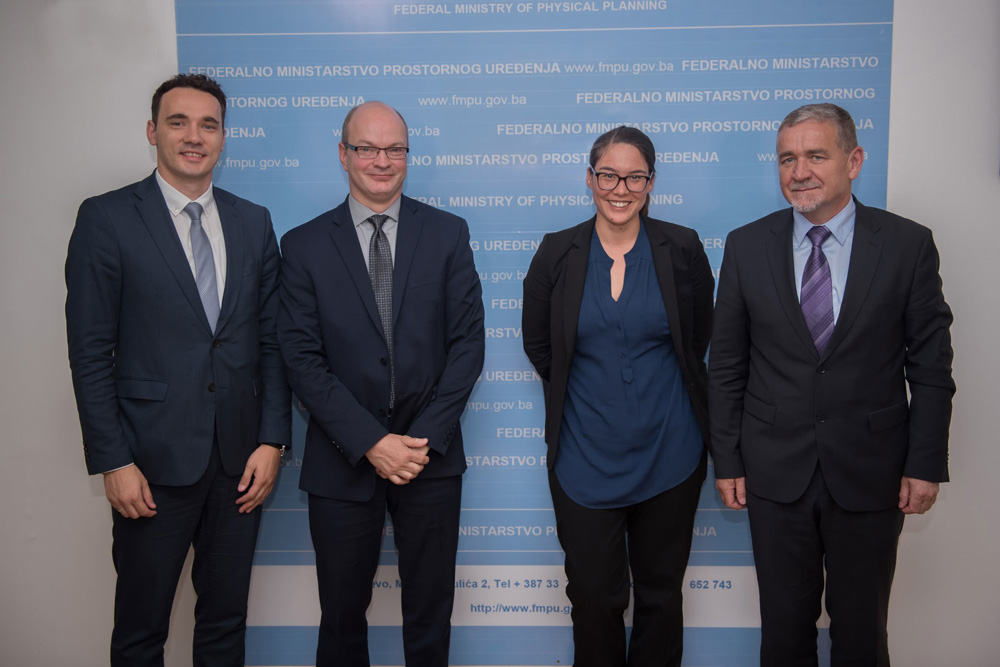
World Bank representatives have completed another seven-day visit to Bosnia and Herzegovina as part of a mid-term review of the implementation of the Bosnia Energy Efficiency Project (BEEP), which is being implemented by the Federation of Bosnia and Herzegovina within the Federal Ministry of Physical Planning.


During the seven-day visit, apart from the Federal Minister of Physical Planning, Mr. Josip Martic, delegation members held meetings with the Implementation Unit of the project.

The meetings highlighted the mutual satisfaction with the previous implementation through the achievement of all 2016 plans. Also, ambitious plans for 2017 were discussed as well as views on the future of the project. At the end of the mission, in Banja Luka were organized joint meetings of the two entity implementation units of the project.


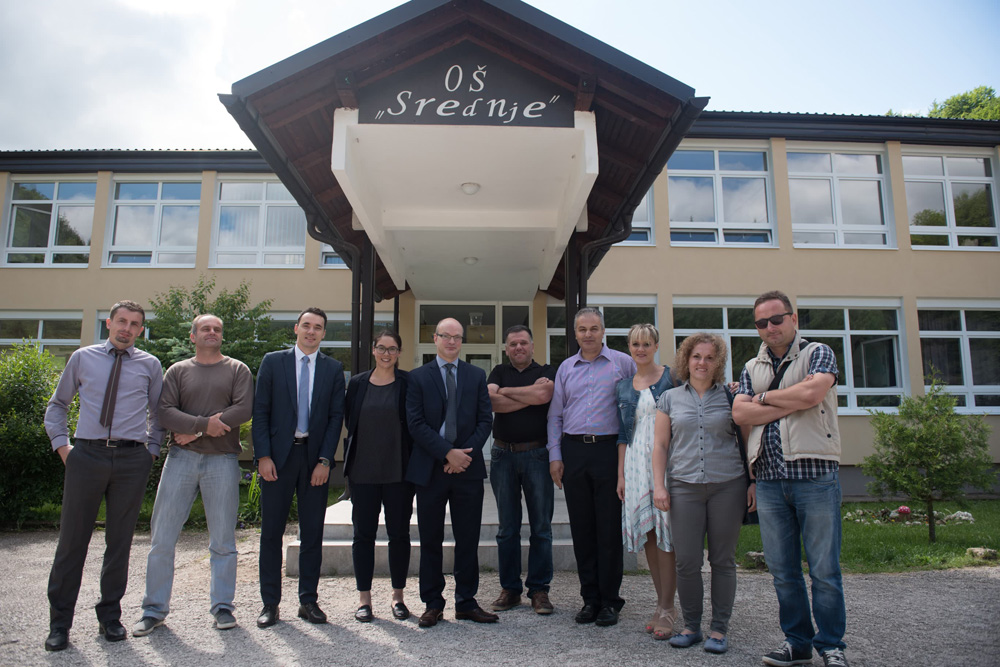
The World Bank delegation, among other things, visited the “Srednje” Elementary School in Ilijaš, acquainted with the works on thermal insulation. This school is located in such a geographic position, which makes it virtually impossible to work normally in the past years during the winter.

“One professor who recently retired was surprised to hear that in the school halls one can now walk without a coat” – he conveyed to his guests Impression Director Refik Kurtovic, pointing out that now the savings on heating are enormous.

” We have improvements in all segments. The new boiler allows us a more comfortable approach to the heating process. Before our janitors had to come in midnight to warm up in the morning classrooms. This is not the case now, “Kurtovic added.


With the resources of the World Bank, the facade has been refurbished, with complete exterior joinery, functionalized boiler room and new radiators.


“The most beautiful part of my job is when I can go out to the field and see the results of my work. I am glad to see people dedicated to their work and finally to younger pupils who have better conditions for schooling, “said Jari Vayrynen, the World Bank project leader.


DSC_6833(1)


The project “Energy Efficiency in Bosnia and Herzegovina” is realized with the help of World Bank loans, with a total value of USD 32 million, of which the Federation of BiH is USD 19.2 million. Within the project in 2016, energy efficiency measures were implemented in 18 public facilities across the Federation of Bosnia and Herzegovina, which significantly improved the comfort of public facilities, as well as the realized savings in energy costs.

Prison Igman

PRISON IGMAN

Address: Branilaca Sarajeva 8, Sarajevo

Heated area: 498 m2


Energy efficiency measures:


  • Thermal insulation of the facade;
  • Replacement of facade openings;
  • Thermal insulation of the ceiling towards the attic;
  • Installation of dynamic thermostatic radiator valves;
  • Installation of new pellet boilers;
  • Automatic regulation for the heating system;
  • Installation of equipment for measuring energy consumption;
  • Installation of temperature and humidity monitoring equipment;

Total investments (BAM with VAT): 159,361.27
Estimated savings on energy costs after the realization of the sub-project, on an annual basis – calculated (BAM): 23,860
Total energy savings (thermal and electrical): 129.050,00 kWh/year
CO2 emissions: 0 tCO2 /year
(before the renovation, biomass was also used as the primary energy source)
Works completed: 03/2018

Public Institution Pazarić Institute – Pavilion 8

PUBLIC INSTITUTION PAZARIĆ INSTITUTE – PAVILION 8

Address: Pazarić Resnik, 71243 Pazarić

Heated area: 1,317 m2


Energy efficiency measures:


  • Thermal insulation of facade walls;
  • Thermal insulation of the ceiling towards the attic;
  • Installation of dynamic thermostatic radiator valves;
  • Installation of equipment for measuring energy consumption;
  • Installation of equipment for monitoring temperature and humidity;

Total investments (BAM with VAT): 212,276.55
Estimated savings on energy costs after the realization of the sub-project, on an annual basis – calculated (BAM): 10,029
Total energy savings (thermal and electrical): 128,190.00 kWh/year
CO2 emissions: 0 tCO2 /year
(before the renovation, biomass was also used as the primary fuel for heating)
Works completed: 03/2018

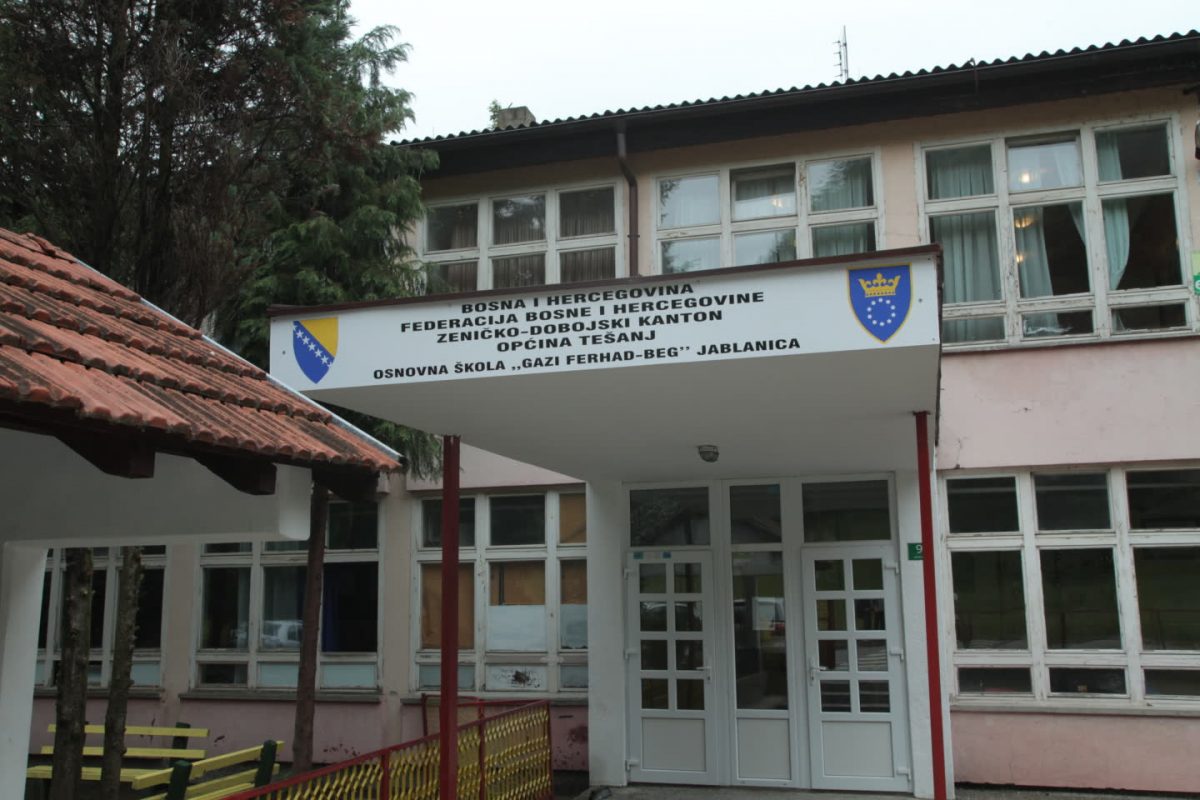
Elementary School Gazi Ferhad-Beg Jablanica

ELEMENTARY SCHOOL GAZI FERHAD-BEG JABLANICA

Address: Jablanica bb, Tešanj

Heated area: 1,330 m2


Energy efficiency measures:


  • Thermal insulation of the facade;
  • Replacement of facade openings;
  • Repair of the roof and thermal insulation of the attic;
  • Replacement of lighting fixtures with more energy efficient ones;
  • Installation of dynamic thermostatic radiator valves;
  • Installation of the new pellet boiler;
  • Installation of heat accumulators;
  • Installation of equipment for measuring energy consumption;
  • Installation of equipment for monitoring temperature and humidity

Total investments (BAM with VAT): 284,841.08
Estimated savings on energy costs after the realization of the sub-project, on an annual basis – calculated (BAM): 9,744
Total energy savings (thermal and electrical): 393,362.00 kWh/year
CO2 emissions: 99 tCO2 /year
Works completed: 12/2017

Prison Bihać

PRISON BIHAĆ

Address: Rasima Delića bb 77000 Bihać

Heated area: 1,098 m2


Energy efficiency measures:


  • Thermal insulation of the facade;
  • Replacement of facade openings;
  • Thermal insulation of the ceiling towards the attic;
  • Installation of dynamic thermostatic radiator valves;
  • Installation of a new pellet boiler;
  • Connection of the administrative building to the new boiler room;
  • Installation of external LED reflectors;
  • Installation of equipment for measuring energy consumption;
  • Installation of temperature and humidity monitoring equipment;

Total investments (BAM with VAT): 284,128.26
Estimated savings on energy costs after the realization of the sub-project, on an annual basis – calculated (BAM): 45,962
Total energy savings (thermal and electrical): 162.714,00 kWh/year
CO2 emissions: 0 tCO2 /year
(before the energy renovation, the energy source was replaced with biomass)
Works completed: 03/2018