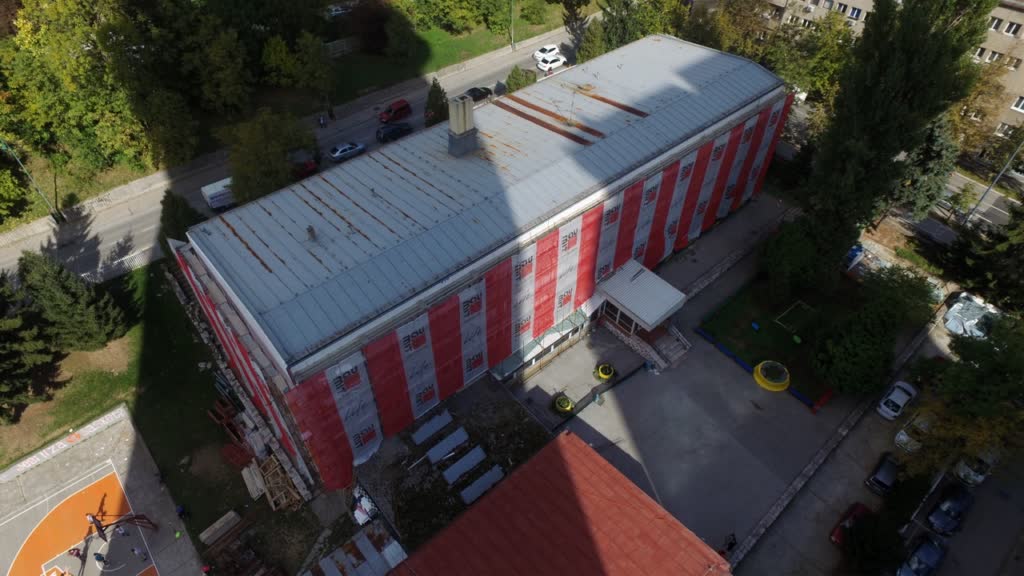
Energy efficient city – a city comfortable to live in

Technology has progressed so far in recent years, that many of the scenes from these films are present today and in real life.


You probably thought that you would see garbage cans that, when they are filled to the brim sends SMS or e-mail to the waste disposal service, in science-fantasy movies only. However, technology has progressed so far in recent years, that many of the scenes from these films are present today and in real life.


Precisely this kind of garbage cans you can find in the streets of Singapore, and this is just one of the ways of improving energy efficiency in this city. Singapore or the Garden City as it is called because of the large number of parks, gardens and cycle paths, is one of the cleanest cities in the world. How has Singapore become one of the best energy-efficient city examples?


Except it has a smart garbage cans, most residents use urban transport, but also because of its excellent approach to urban transport planning which includes strong restrictions on ownership and use of private cars. Why is this important? Because heavy traffic congestion and greenhouse gas emissions are threatening the environment, but also the health of the people on Earth. We have witnessed increased concentration of polluted air in our country in the past few days, and the result is low quality coal heating and large concentrations of older car models which do not fulfilled modern environmental regulations. Experts of the largest energy efficiency project in Bosnia and Herzegovina BEEP – Bosnia Energy Efficiency Project warn about these problems, and propose solutions through high-quality transport planning, in terms of designing streets for people, not for traffic.


Developing a city in a sustainable energy-efficient urban center is a complex task, but examples such as Singapore are proof that through clear vision, strong management and strong state institutions can make a city comfortable to live in.


Until then, experts advise reducing the use of motor vehicles, bicycle use and walking for lesser times for smaller routes in order to start contributing to cleaner air and a healthier environment.
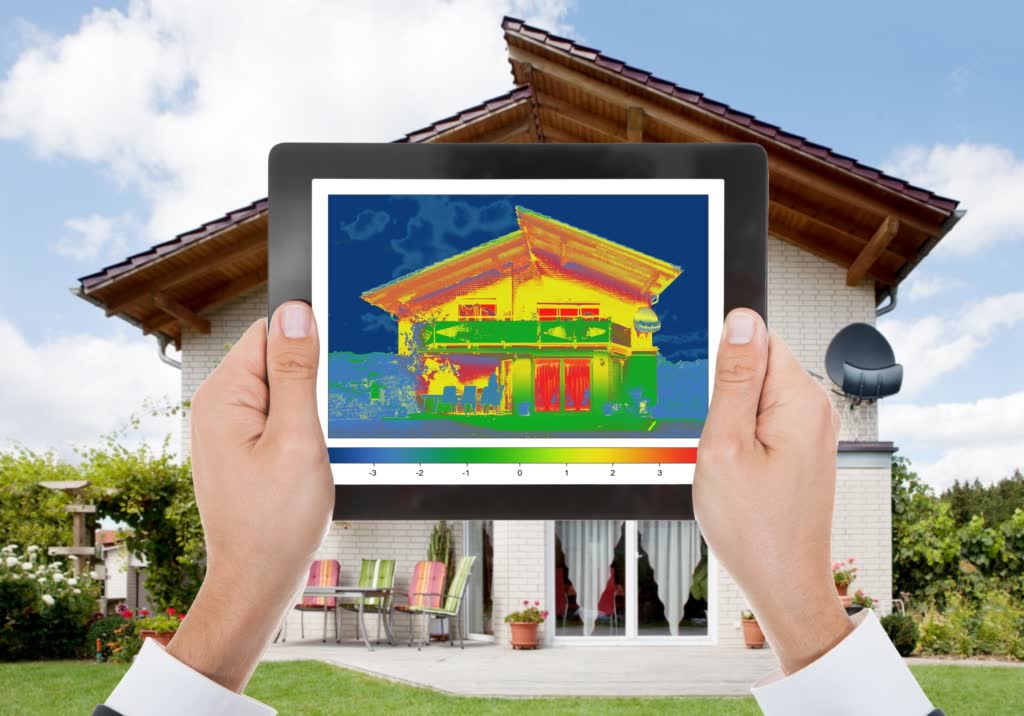
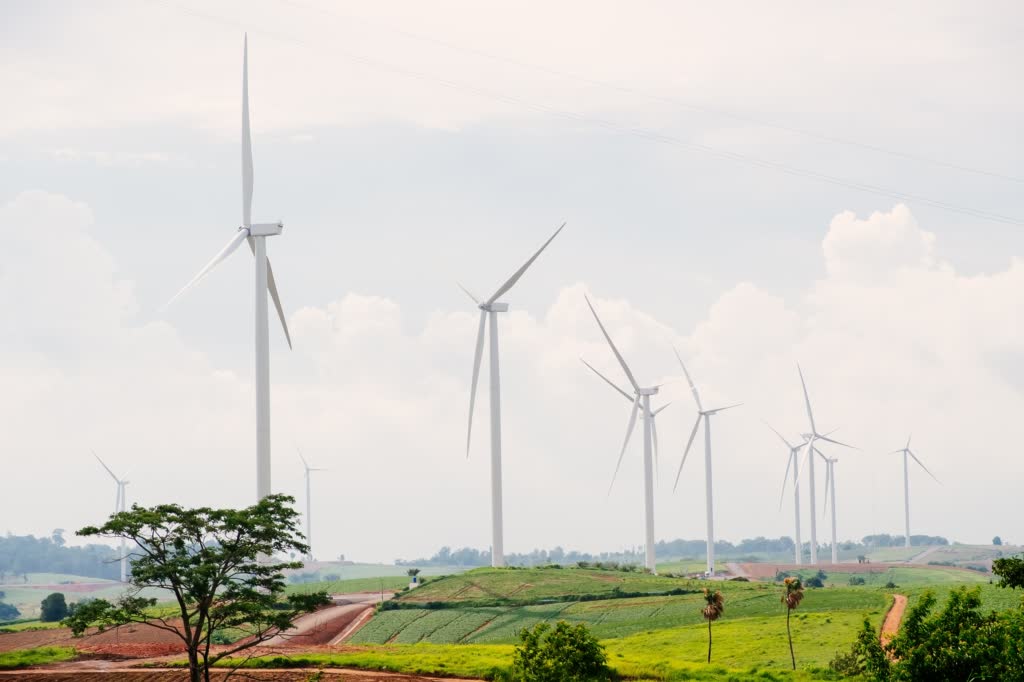
Tips and Recommendations to Improve Energy Efficiency at Home and at Work

How much do we really know about the energetic efficiency?

By definition, energy efficiency implies a series of measures taken with a view to reducing energy consumption, cost savings and CO2 emissions reduction which does not disturb the conditions of work and life.


To ensure a pleasant stay in the premises where we live every day we use a large amount of energy. However, this energy can be saved in several ways by using energy-efficient devices as well as energy-efficient behavior. Do not believe it? Try it.


As much as it seemed a simply, and minimum actions such as closing the whip while you brush your teeth, or riding a bicycle to work instead of driving a car will help save energy. Also, instead of the ordinary, use energy saving bulbs that use up to five times less energy than incandescent. Turn off the light in the rooms you do not currently reside, as well as a TV and a computer if you do not use them. Also, you need to know that a screensaver does not save energy. Devices such as microwave, DVD, computer, and all other devices with lights regardless of whether they are in standby, they consume energy because they are plugged into electricity.


The major consumers of energy in the household are refrigerators, freezers, washer, dryer and electric stove. One of the smart ways to use a home appliance is that while cooking you always put the covers on the pots, so heat will be kept longer in the vessel. In that way heat will be kept longer in the bowl and on the other hand you will save up to 20% of the energy.


Although it may sound like a lesson from school books, these are just little tricks how you can be energy efficient. Except that there will be reduced energy, there will also be a reduced bill for electricity” – said the experts from the BEEP project – Bosnia Energy Efficiency Project.


For many people, these savings will not be big enough however, when it comes to this topic and least action are a lot. It is time to move from something, why not as individuals do not start from the premises in which we live every day?


How did Denmark become the country with the lowest energy intensity?

Energy efficiency awareness in Bosnia and Herzegovina is still not sufficiently developed.

Energy efficiency awareness in Bosnia and Herzegovina is still not sufficiently developed. According to the latest available information, nearly 20 percent of gross national income in B&H is spent on energy, which puts our country in the group of the largest energy distributors in South East Europe.


Energy efficiency is a topic of which the last few years speaks a lot in Bosnia and Herzegovina and thanks to numerous projects that support this problem, slowly gaining greater significance, but not even close as in the countries of the European Union. One of the best examples of countries with a low energy intensity is Denmark, where after 25 years of implementing energy efficient measures, energy consumption decreased by 7 percent, while carbon dioxide (CO2) emissions are decreased by 30 percent.


To achieve this, one of the steps was the move by the Government of Denmark which has taken serious measures in the field of the development of technologies for the use of renewable energy sources. Bosnia and Herzegovina is far from these numbers. The question is why?


“Due to obsolete construction technology and poor insulation of buildings so as still insufficiently developed awareness of energy efficiency on average it consumes twice as much energy as the EU. However, in certain parts of Bosnia and Herzegovina, the energy turnaround has already started, but for a systemic solution, require the support of B&H authorities with all government levels”, said experts from BEEP – Bosnia Energy Efficiency Project.


Many cities in the European Union have recognized the benefits of using renewable energy sources to reduce energy consumption, CO2 emissions as well as financial savings and which do not impair the conditions of work and life. If we look at the natural resources of Bosnia and Herzegovina it is clear that our country has great energy potential, however, to get closer to these cities our country still has to work hard to fulfill its obligations under the Energy Community Treaty which has committed itself to the implementation of the EU energy efficiency directive.

Green construction is the future of civil engineering

Building and Construction of the future.


The heating season has arrived, and with it the higher heating bills. No matter how hard you are trying to save on heating, your bills remain the same. And it is not surprising, given that, if we look closer at the houses in Bosnia and Herzegovina, most of them are not been completed. Houses with two or three floors are being built, of which only ground floor is habitable, while the other floors in most cases remain unfinished, without joinery and facades. During the construction the importance of energy efficiency and the quality of construction of the facility is not given.


Though investment in quality facade, good heat insulation and adequate joinery require a certain financial cost, long term will pay off. Namely, for several years, the money invested will return, and energy consumption will be reduced between 40 and 60 percent. You do not believe?


Le Hive Building in Paris, where Schneider Electric is located, the first building in the world that BREEM, the world’s most prestigious world ranking system of green construction, has awarded with six stars. Le Hive is an excellent example of a complete return on investment in just five years, using a range of energy efficiency measures and the full recycling of waste and wastewater.


With an investment of 200 million euros, average electricity consumption per square meter of the building was reduced from 150 kWh to 74 kWh, which amounts for almost 50 percent of total consumption.


This building is just one of the examples of today’s construction trends in the world, which show great interest in green construction. Eco homes, low energy, passive and solar homes are just some examples of green construction and the common is long-term savings.


However, how much BiH is following world trends when it comes to this issue, we asked experts from the Bosnia Energy Efficiency Project – BEEP project.


As in all sectors, our country is lagging behind and in construction sector. Poor or non-existent insulation, worn windows, inadequate heating modes, as well as an inadequate method of construction led to the extremely unfavorable position of the construction sector which is reflected in the quality of life in Bosnia and Herzegovina. Green construction is not a trend, but should be a way of life that will contribute to more comfortable and safer living conditions. As a society we must take seriously this issue. It is evident that very positive things happen in the last period when it comes to this area and that really makes us happy” – said the representatives of the BEEP project.


What is the benefit of renewable energy sources shows the fact that “Houses of the Future” which cooling and electricity are derived from renewable energy sources are being built all around the world. And this is not new, the first such house was designed 1990 in Germany, and the number of green buildings globally doubles every three years.

The World Bank is more than pleased with the implementation of the BEEP project

The World Bank is more than pleased with the implementation of the BEEP project


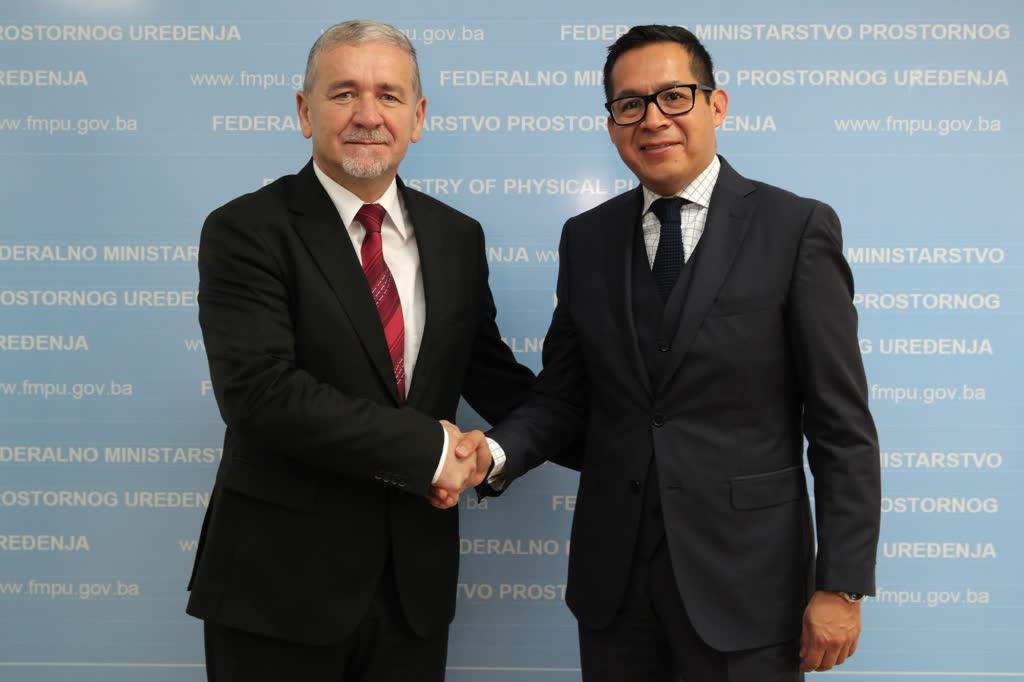
In the regular activities of the World Bank Mission in Bosnia and Herzegovina a visit to the Ministry of Physical Planning of the FBiH was organized, on the occasion of the “Bosnian Energy Efficiency Project” implementation.


The meeting was attended by Josip Martic, Federal Minister of Physical Planning, Emanuel Salinas, Head of the World Bank for Bosnia and Herzegovina, Kathrin Hofer, Task Team Leader Project ahead of the World Bank, Mustafa Copelj, World Bank Project Manager for the Federation of BiH, and Christian Daniel Mahler specialist for energy.


1(1)


The meeting expressed mutual satisfaction with activities which are being implemented over the past two years, but also expressed mutual readiness to continue cooperation with similar projects in the future.


3(1)


We are more than pleased with the realization of the World Bank project so far, bearing in mind that through the project by renovating really old public facilities we achieve better working conditions in schools and hospitals and at the same time we save energy. The interest in this project is truly recognized and we are pleased to see that about 50 public facilities will eventually be renovated throughout the Federation of Bosnia and Herzegovina”, said Josip Martic, Federal Minister of Physical Planning.


2(1)Within the project, 18 public buildings were implemented over the past year, while 19 public buildings will be implemented this year. Results of energy consumption monitoring are already showing real benefits of energy efficiency which is one of the key objectives of the project.
 

4(1)


The overall benefit of this project, which among other things includes, a more comfortable sojourn and significantly lower energy bills, will have more than 80,000 users mainly students, patients and employees of educational and health institutions.

The World Bank is more than pleased with the implementation of the BEEP project

In the regular activities of the World Bank Mission in Bosnia and Herzegovina a visit to the Ministry of Physical Planning of the FBiH.

The World Bank is more than pleased with the implementation of the BEEP project


 In the regular activities of the World Bank Mission in Bosnia and Herzegovina a visit to the Ministry of Physical Planning of the FBiH was organized, on the occasion of the “Bosnian Energy Efficiency Project” implementation.


2


The meeting was attended by Josip Martic, Federal Minister of Physical Planning, Emanuel Salinas, Head of the World Bank for Bosnia and Herzegovina, Kathrin Hofer, Task Team Leader Project ahead of the World Bank, Mustafa Copelj, World Bank Project Manager for the Federation of BiH, and Christian Daniel Mahler specialist for energy.


3


The meeting expressed mutual satisfaction with activities which are being implemented over the past two years, but also expressed mutual readiness to continue cooperation with similar projects in the future.


We are more than pleased with the realization of the World Bank project so far, bearing in mind that through the project by renovating really old public facilities we achieve better working conditions in schools and hospitals and at the same time we save energy. The interest in this project is truly recognized and we are pleased to see that about 50 public facilities will eventually be renovated throughout the Federation of Bosnia and Herzegovina”, said Josip Martic, Federal Minister of Physical Planning.


1


Within the project, 18 public buildings were implemented over the past year, while 19 public buildings will be implemented this year. Results of energy consumption monitoring are already showing real benefits of energy efficiency which is one of the key objectives of the project.


The overall benefit of this project, which among other things includes, a more comfortable sojourn and significantly lower energy bills, will have more than 80,000 users mainly students, patients and employees of educational and health institutions.

Implementation of works on energy efficiency in two buildings in Canton Sarajevo in progress

Planned work will be realized in accordance with world standards in the field of energy efficiency.

Implementation of works on energy efficiency in two buildings in Canton Sarajevo in progress


Within the framework of the Bosnia Energy Efficiency Project (BEEP) funded by the World Bank, in 2016, four public facilities have been restored in Sarajevo Canton. This year, the implementation of energy efficiency measures on public facilities continued thanks to the approval of the loan funds by the Sarajevo Canton Government, while consultancy services were funded by the Government of the Federation of B&H. New investments are planned for another two facilities, the Clinic for Neuropsychiatry of the University Clinical Center Sarajevo and “Isak Samokovlija” primary school, where works are in progress. Planned work will be realized in accordance with world standards in the field of energy efficiency.


1Prije radova 1(1)
Clinical center Neuro-Psihijatrija – before works


1Prije radova 2
Clinical center Neuro-Psihijatrija – before works


Works on the KCUS Clinic for Neuropsychiatry implies thermal insulation of facade walls, ceiling towards the attic and underneath the interlocking structures above the blackened cellar replacement of existing joinery and locksmiths, renovation of the roof covering at the central and secondary side of the clinic, and flat roofs on the central part of the terrace. Also, new circulation pumps and thermostatic valves on radiators installation are planned, as well as the purchase of a new system for automatic replenishment and equipment for measuring energy consumption and for monitoring temperature and humidity. In addition, energy management will be established also. The estimated value of the investment is 1.242.888,53 BAM with VAT.


2Radovi u toku 1(1)
Clinical center Neuro-Psihijatrija – during works


3Radovi u toku 2(1)
Clinical center Neuro-Psihijatrija – during works


To increase energy efficiency in the building of “Isak Samokovlija” primary school, implemented works including thermal insulation of facade walls, replacement of existing joinery and locksmiths, roof thermal insulation installation or replacement, thermostatic valves on radiators as well as equipment for measuring energy consumption and for monitoring temperature and humidity. In addition, energy management will be established also. The estimated value of the investment is 625.733 KM BAM with VAT.


1Prije radova 1(1)
Elementary school „Isak Samokovlija“ – before works


1Radovi u toku 1
Elementary school „Isak Samokovlija“ – during works


Activities realized within the project will ensure a reduction in CO2 emissions, which means the transition to cleaner energy sources reduction of air pollution during the winter period caused by improper and inefficient combustion of fuel, increasing the level of comfort in the objects and raising awareness of energy efficiency.


3Prije radova 3(1)
Elementary school „Isak Samokovlija“ – before works


4Radovi u toku 3
Elementary school „Isak Samokovlija“ – during works

In addition to a more comfortable sojourn, significant savings in energy costs are also expected and ultimately contributing to significant saving and environmental protection.

Implementation of energy efficiency works on six buildings in ZDK in progress

Negotiations for project implementation are currently underway in 2018.

Implementation of energy efficiency works on six buildings in ZDK in progress


The Federal Ministry of Physical Planning is currently implementing the largest energy efficiency project in B&H, Bosnia Energy Efficiency Project, which is for the Federation of B&H funded by the World Bank, with a total value of USD 19.2 million.


This is the second year of successful project realization where last year’s energy efficiency measures were implemented on 18 public facilities, while the plan for this year is 19 public facilities, mainly schools and hospitals.


2Ivana fra Frane Jukica prije radova(1)
Elementary School Ivana fra Frane Jukića before works


1Ivana fra Frane Jukica radovi u toku(1)
Elementary School Ivana fra Frane Jukića after works


In Zenica-Doboj Canton, five public buildings were renovated in 2016 (four schools and one hospital) with a total investment of over 2 million BAM. This year, the plan is to rebuild the six schools, with a total investment of 1.7 million BAM. Planned work will be realized in accordance with world standards in the field of energy efficiency.


As with most other facilities, works on these facilities of the primary schools “Gazi Ferhad-beg” Jablanica, “Vareš Majdan” Vareš, “15 april” Kakanj, “21 mart” Doboj Jug, “Ivana fra Frane Jukića” Usora and “Rizah Odžekčić” Zavidovići high school, mainly include replacements of joinery and locksmiths, installation of thermal insulation and heating improvements, as well as equipment for measuring energy consumption and for monitoring temperature and humidity. In addition, energy management will be established, also.


1 -21 mart prije radova(1)
Elementary school 21. mart before works


2 - 21 mart radovi u toku(1)
Elementary school 21. mart after works


Activities to be implemented within the project, will ensure a reduction in CO2 emissions which means the transition to cleaner energy sources reduction of air pollution during the winter period caused by improper and inefficient combustion of fuel, increase the level of comfort in the objects, and raising awareness of energy efficiency. In addition to a more comfortable stay, significant savings in energy costs are expected, and ultimately contributing to significant saving and environmental protection.


Negotiations for project implementation are currently underway in 2018.

Beepster visited schoolchildren in Tešanj and Doboj Jug

BEEP educates the youngest about energy-efficient behavior.

BEEP educates the youngest about energy-efficient behavior


Regular classes in “Gazi Ferhad-Beg”, Tešanj and “21. Mart”, Doboj Jug elementary schools has interrupted the sudden visit of the super hero, Beepster, who came from another planet to convey an important message to students. “Your planet Earth is in great danger,” Beepster warned them.


1DSC_7906(1)


He explained to students, through an educational – entertaining workshop, that burning of fossil fuels does produce energy but that it also produces carbon dioxide (CO2) gas. That gas enables the atmosphere to retain a part of the solar radiation and heat, thus preventing cooling of the Earth and radiation of heat into the space. At the same time, high consumption of fossil fuels everyday creates excessive amounts of this gas. This leads to global warming, which significantly affects the Earth’s climate.


2DSC_7847(1)


You do not want to floods, droughts and world without forests” – said Beepster and shared tips for smarter use of energy to save Earth together. “Do not let the water run while you brush your teeth. Use energy saving light bulbs, and plant a tree. With your behavior you can become heroes and change the world. “


At Beepster’s workshops the students had an opportunity to watch the animated film about climate change, and take part in the interactive quiz of knowledge called BEEPomanija and test their knowledge of energy efficiency. Also Beepster introduced Beepomat, a device that easily illustrates how irrational use of energy from fossil fuels leads to global warming.


3DSC_7962(1)


Beepster continues its journey in December, in elementary schools throughout B&H, which have been renovated or are in the process of reconstruction in the framework of the World Bank project “Bosnian Energy Efficiency Project” (BEEP).

Implementation of energy efficiency works on health facilities in Canton 10

Implementation of energy efficiency works on health facilities in Canton 10.


On public facilities, the “Fra Mihovil Sucic” Hospital, Livno and the Tomislavgrad Health Center are undergoing works to increase energy efficiency. These works aim to improve the patient’s living conditions and facilitate so as employee daily work, contribute to new employment, lower costs and better air quality. Planned work will be realized in accordance with world standards in the field of energy efficiency.


Prije radova 1
Cantonal Hospital “Fra Mihovil Sučić” (picture before works)


Work on the County Hospital “Fra Mihovil Sucic” facility imply facade walls thermal insulation, existing joiner replacement, thermal insulation of the internal walls of the unheated area, installation of new generation EE lighting, installation of a circuit for electric power compensation and establishment of energy management. The estimated value of the investment is 471.543 KM with VAT.


Radovi u toku 1
Cantonal Hospital “Fra Mihovil Sučić” (picture during works)


To increase the energy efficiency on the premises of the Health Center Tomislavgrad are the works that cover facade walls thermal insulation, replacement of existing joinery, thermal insulation of the ceiling towards the attic, replacement of existing incandescent bulbs with energy saving light bulbs, installation of thermostatic valves on radiators, replacement of energy products for the central heating system and boiler, establishment of energy management, installation of equipment for measuring energy consumption as well as monitoring of temperature and humidity. Estimated value of the investment is 407.731 KM with VAT.


Prije radova 1
Hospital Tomislavgrad (picture before works)


Energy efficiency measures implementation on these facilities is realized within the framework of the World Bank project “Energy Efficiency in B&H” (BEEP).  This is the largest energy efficiency project in B&H within which in 2016 are implemented energy efficiency measures for 18 public buildings in the Federation of Bosnia and Herzegovina.


Radovi u toku 1
Hospital Tomislavgrad (picture during works)